Oppo Reno 15 5G Series Sparks Risky Premium Gamble in India

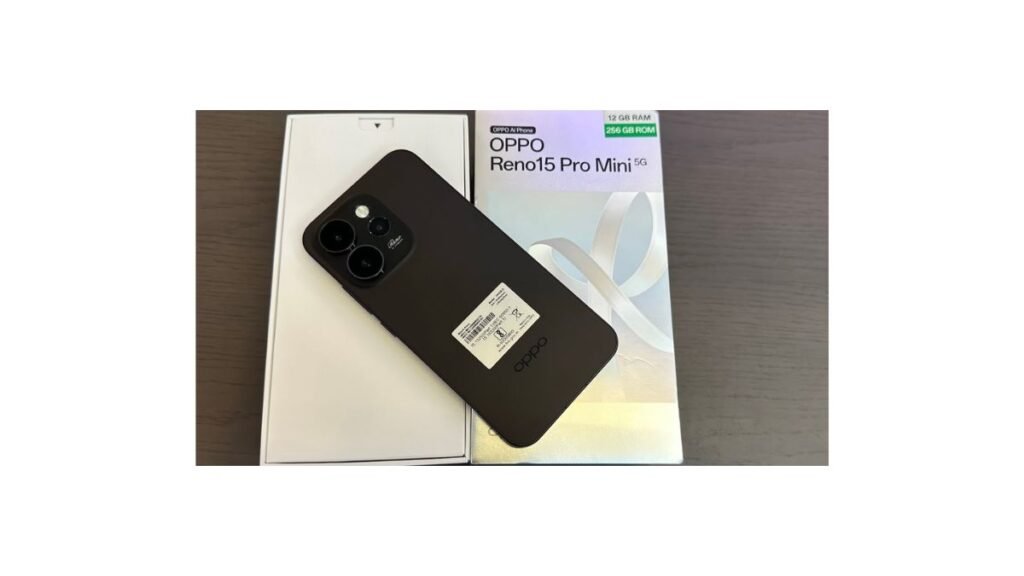
Oppo Reno 15 5G series showcasing premium design and AMOLED display ahead of India launch

Oppo Reno 15 5G Series: Oppo’s Bold Premium Gamble in India

The Oppo Reno 15 5G series is Oppo’s most ambitious attempt yet to rewrite its premium narrative in India. For years, the Reno lineup has carried stylish design and strong displays—but also skepticism around value at higher prices. With the Reno 15, Reno 15 Pro, and the unusually positioned Reno 15 Pro Mini, Oppo is no longer hedging its bets. Leaks suggest a January 8 launch that could push the series into price territory traditionally ruled by Samsung and Apple. More than a routine upgrade, the Oppo Reno 15 5G series signals a calculated gamble—one that tests whether design, display innovation, and brand confidence can finally outweigh perception.


Why the Oppo Reno 15 5G Series Launch Matters

Historically, the Reno series has struggled with perception. It often carried premium pricing without fully convincing buyers it belonged in the same conversation as true flagships. The Oppo Reno 15 5G series suggests Oppo is actively trying to change that narrative.

If current leaks are accurate, Oppo is attempting three strategic moves simultaneously:

  • Stretching upward with the Oppo Reno 15 Pro 5G

  • Defending the ₹40,000–₹50,000 segment with the base Oppo Reno 15 5G

  • Experimenting with compact premium demand through the Reno 15 Pro Mini 5G

That’s not a safe play—it’s a confident one.


Oppo Reno 15 5G Series Pricing Signals a Strategic Split

Pricing leaks surrounding the Oppo Reno 15 5G series reveal how aggressively Oppo may be repositioning the Reno brand:

  • Oppo Reno 15 5G (base model): Expected under ₹50,000

  • Oppo Reno 15 Pro Mini 5G: Likely under ₹40,000

  • Oppo Reno 15 Pro 5G: European pricing of €799 suggests around ₹84,000

If the Reno 15 Pro 5G truly lands near ₹80,000, Oppo would be placing a Reno phone dangerously close to entry-level flagship territory—territory traditionally occupied by Galaxy S-series and iPhones. That alone signals a major mindset shift.


Display and Design Lead the Oppo Reno 15 5G Series Strategy

Rather than chasing raw benchmark numbers, Oppo is doubling down on its strongest Reno identity pillars: display quality and industrial design.

Oppo Reno 15 5G (Base Model) Highlights

  • 6.59-inch FHD+ AMOLED display

  • 120Hz refresh rate with 10-bit colour depth

  • Up to 1,200 nits brightness

  • Slim profile under 8mm, weight under 200g

Oppo Reno 15 Pro 5G Display Focus

  • 6.78-inch AMOLED panel

  • Peak brightness up to 3,600 nits

  • Corning Gorilla Glass Victus 2

  • Ultra-slim 7.65mm body

Oppo Reno 15 Pro Mini 5G: The Unexpected Standout

  • Compact 6.32-inch AMOLED display

  • Same 3,600 nits peak brightness as the Pro

  • Lightweight 187g design

  • Gorilla Glass 7i protection

In a market obsessed with oversized phones, the Reno 15 Pro Mini 5G could quietly become the most talked-about model.


Oppo Reno 15 Series Design Language as a Differentiator

The Oppo Reno 15 5G series isn’t selling specs alone—it’s selling identity. Oppo continues to treat smartphones as lifestyle products, leaning heavily into:

  • HoloFusion design treatment

  • Dynamic Stellar Ring camera module

  • Bold colour options like Glacier White, Cocoa Brown, Aurora Blue, and Sunset Gold

This reinforces Oppo’s long-standing belief that aesthetics can be just as important as raw hardware.


The Bigger Picture: Oppo’s Premium Test in India

The Oppo Reno 15 series looks less like a routine launch and more like a market experiment.

Oppo is testing whether Indian consumers are ready to accept:

  • A Reno phone priced near ₹80,000

  • A compact premium phone in a market dominated by large screens

  • Display-first innovation over chipset-centric marketing

If successful, this could permanently elevate the Reno brand. If not, Oppo may be forced to recalibrate its premium ambitions.


What to Watch After the Oppo Reno 15 Launch

Several unanswered questions will determine the fate of the Oppo Reno 15 series:

  • Will Oppo justify the Pro model’s pricing with camera or chipset surprises?

  • Can the Reno 15 Pro Mini 5G create a real compact-phone niche?

  • How aggressively will Oppo price the base Reno 15 5G to fight rivals?

Official answers should arrive soon, as Oppo is expected to confirm launch details shortly.


FAQ: Oppo Reno 15 5G Series

Q1: When will the Oppo Reno 15 series launch in India?
The Oppo Reno 15 5G series is expected to launch on January 8, though Oppo has not officially confirmed the date yet.

Q2: How many models are in the Oppo Reno 15 lineup?
The lineup is expected to include three models: Oppo Reno 15 5G, Oppo Reno 15 Pro 5G, and Oppo Reno 15 Pro Mini 5G.

Q3: What is the expected price of the Oppo Reno 15 5G series?
Leaks suggest pricing could range from under ₹40,000 for the Pro Mini to around ₹80,000+ for the Reno 15 Pro 5G.

Q4: What makes the Oppo Reno 15 Pro Mini 5G special?
The Reno 15 Pro Mini 5G combines a compact size with flagship-level brightness and display quality, making it rare in today’s market.

Q5: Is Oppo targeting the premium segment with the Reno 15 series?
Yes. The Oppo Reno 15 5G series clearly signals a premium push, especially with the Reno 15 Pro positioned near flagship pricing.


Conclusion: Oppo Reno 15 5G Series Is a Statement, Not a Refresh

The Oppo Reno 15 5G series is shaping up to be a strategic turning point for Oppo in India. With a three-tier lineup covering compact premium, upper-midrange, and near-flagship pricing, Oppo is deliberately testing how far the Reno brand can stretch.

If the pricing leaks hold true, the Reno 15 Pro 5G could redefine expectations around the Reno name, while the Reno 15 Pro Mini 5G may emerge as the lineup’s most practical and distinctive option. Oppo’s heavy focus on display innovation and design suggests this series is aimed squarely at style-conscious, media-first users rather than spec-chasing enthusiasts.

One thing is clear: the Oppo Reno 15 series is no longer playing it safe. This launch is a calculated risk—and potentially the most important Reno launch Oppo has attempted in India.

Redmi Note 15 Is Coming — But Xiaomi’s Biggest Challenge Isn’t Specs Anymore

Redmi Note 15 smartphone shown ahead of its expected India launch as Xiaomi prepares its next mid-range release

Redmi Note 15 Is About More Than a New Phone — It’s Xiaomi Testing the Limits of the Budget Flagship Formula

Every year, the Redmi Note launch pretends to be routine. And every year, it quietly reshapes India’s smartphone market.

The upcoming Redmi Note 15 series, expected to debut alongside the Redmi Pad 2 Pro in India, isn’t just another mid-cycle refresh. It arrives at a moment when the ₹15,000–₹25,000 segment is under real pressure—from rising component costs, longer upgrade cycles, and consumers who are no longer impressed by incremental spec bumps.

If Xiaomi gets the Note 15 right, it reinforces its dominance. If it doesn’t, rivals like Samsung, Motorola, and Realme are ready to pounce.


Why the Redmi Note 15 launch actually matters

The Redmi Note series has long been Xiaomi’s volume engine in India. For many buyers, this is the default upgrade choice—not because it’s flashy, but because it historically delivered the most hardware for the least money.

But 2025 is different.

  • Buyers are holding onto phones longer

  • “Flagship features” have trickled down faster than expected

  • Mid-range phones are being judged on longevity, not specs alone

The Redmi Note 15 isn’t just competing with last year’s Note—it’s competing with discounted flagships, exchange-driven deals, and increasingly capable rivals that promise cleaner software or better cameras.

This launch will test whether Xiaomi still understands the Indian mid-range buyer as well as it once did.


What to expect from the Redmi Note 15 series

While Xiaomi hasn’t officially confirmed specifications, the Redmi Note 15 lineup is expected to continue its familiar multi-model strategy—likely including a standard Note 15, a Pro variant, and possibly a Pro+ model.

The core expectations are clear:

  • A refined AMOLED display with high refresh rate, now considered non-negotiable

  • A performance-focused chipset tuned more for efficiency than raw benchmarks

  • Camera upgrades that prioritise consistency, not megapixel inflation

  • Fast charging improvements, even if battery capacity stays similar

What will matter more than individual specs is balance. Recent Redmi Notes have sometimes chased numbers—higher megapixels, faster charging—at the expense of camera reliability or thermal performance. The Note 15 has to feel polished, not just powerful.


Pricing will decide everything

Expected pricing for the Redmi Note 15 series is likely to start in the mid-teens, with higher-end variants pushing toward the ₹25,000 mark.

That’s where the real risk lies.

At those prices, Redmi is no longer competing only with budget phones. It’s competing with:

  • Older flagships on discount

  • “Clean Android” alternatives

  • Samsung’s aggressively priced Galaxy A-series

  • Motorola’s design-first mid-range phones

Xiaomi can’t rely on brand loyalty alone anymore. The Note 15 must justify its price through real-world performance, software stability, and long-term updates—areas where buyers have become far more critical.


Redmi Pad 2 Pro: a quiet but strategic move

The expected launch of the Redmi Pad 2 Pro alongside the Note 15 series is not accidental.

Tablets are slowly regaining relevance in India—for education, content consumption, and casual productivity. By pairing a mid-range tablet with its phone launch, Xiaomi is clearly aiming to strengthen its ecosystem play.

If priced aggressively, the Pad 2 Pro could appeal to:

  • Students looking for a large-screen companion

  • Families wanting a shared device

  • Users priced out of premium tablets

This also signals Xiaomi’s belief that India’s value-conscious buyers are ready to spend more—as long as the value proposition is obvious.


The bigger picture: Redmi’s moment of truth

The Redmi Note 15 launch will reveal whether Xiaomi is still leading the mid-range conversation—or merely reacting to it.

In the past, Redmi defined what buyers should expect at a given price. Today, expectations are already high. Cameras must be dependable. Software must age well. Performance must stay consistent after six months, not just on day one.

If the Note 15 series delivers refinement rather than gimmicks, it will remain the default recommendation for millions. If not, this could be the year Redmi finally feels real pressure in its safest segment.


Looking ahead

Expect the Redmi Note 15 series to launch in India soon, likely accompanied by aggressive early-bird pricing and online-first availability. But the real verdict won’t come from spec sheets or launch events—it will come six months later, when buyers decide whether the phone still feels worth what they paid.

In 2025, that’s the only metric that matters.

Redmi Note 15 5G: Redefining Value and Performance in India’s Mid-Range Smartphone Market

Redmi Note 15 5G smartphone showing curved AMOLED display, 108MP camera, and sleek design

Redmi Note 15 5G: Price, Specs, and Features Shaping India’s Mid-Range Market

India’s mid-range smartphone segment is about to get a significant upgrade with the upcoming Redmi Note 15 5G. Set to launch on January 6, 2026, this device promises to combine high-end features like a 108MP camera, 6.77-inch AMOLED display, and 5,520mAh battery under a competitive price, challenging rivals in the ₹20,000–₹25,000 range. Here’s a detailed look at what makes the Redmi Note 15 5G a potential game-changer.


Redmi Note 15 5G Launch in India: Key Details and Pricing

Leaked reports indicate that the Redmi Note 15 5G will be available through Amazon India and the Xiaomi India online store. Pricing is expected to be aggressive:

  • ₹22,999 for 8GB RAM + 128GB storage

  • ₹24,999 for 8GB RAM + 256GB storage

This undercuts the global variant, which launched at roughly ₹30,000 in Poland, and offers higher RAM for better multitasking in India. With color options likely including Black, Glacier Blue, and Mist Purple, Xiaomi is positioning this device as a premium-feel mid-range smartphone without breaking the budget.


Display, Performance, and Battery: What Sets It Apart

Curved 6.77-inch AMOLED Display and 120Hz Refresh Rate

The Redmi Note 15 5G features a curved AMOLED panel with 120Hz refresh rate and peak brightness of 3,200 nits. With Hydro Touch 2.0, the display remains responsive even with wet fingers, while TUV Triple Eye Care certification ensures reduced eye strain—a rare feature in mid-range phones.

Snapdragon 6 Gen 3 Chipset: Performance and Longevity

Powering the device is Qualcomm’s Snapdragon 6 Gen 3, promising 10% GPU boost and 30% CPU improvement over its predecessor. Xiaomi claims the chipset will deliver 48 months of lag-free performance, reflecting a focus on long-term usability rather than short-term benchmark scores.

5,520mAh Battery with 45W Fast Charging

Battery life is a major selling point. The 5,520mAh unit supports 45W fast charging, enabling users to comfortably last 1.5–1.6 days on a single charge—an advantage in a market where battery endurance often trumps display or camera specs.

IP66 Dust and Water Resistance

Adding durability to the mix, the device carries an IP66 rating, offering resistance against dust and powerful water jets. This is a feature that sets it apart in the mid-range segment, which rarely sees this level of ingress protection.


Camera Capabilities: 108MP Sensor and Real-World Photography

The 108MP MasterPixel primary sensor with optical image stabilization (OIS) enables high-resolution photos and 4K video recording, a rare combination in this price bracket. Paired with an 8MP secondary sensor and 20MP front camera, the Redmi Note 15 5G targets content creators and social media users who demand reliable, versatile photography without paying flagship prices.


Why the Redmi Note 15 5G Matters for Indian Consumers

The significance of the Note 15 5G extends beyond specs:

  1. Value for Money: Offers flagship-level camera and display features under ₹25,000.

  2. Longevity: Optimized performance and promised multi-year support align with consumers holding phones for 3+ years.

  3. Real-World Usability: Large battery, water resistance, and a bright AMOLED display improve daily user experience.

Xiaomi’s focus on user experience over raw specs is a strategic shift for the mid-range market in India.


Competitive Landscape: How Rivals Will Respond

Brands like Samsung, Realme, and Vivo dominate India’s mid-range segment, but the Redmi Note 15 5G raises the bar:

  • Samsung Galaxy A series may face pressure to enhance display, battery, or camera features.

  • Realme and Vivo will need to rethink camera sensors and software optimization to compete.

  • Aggressive pricing could trigger value-focused competition, benefiting Indian consumers.


Future Implications: Mid-Range Smartphones in 2026

If Xiaomi executes on the Note 15 5G’s promises, we may see:

  • Higher baseline features in mid-range smartphones, including OIS cameras and AMOLED displays.

  • Increased importance of software support and device longevity as differentiators.

  • Competitive pricing pressure, prompting rivals to deliver more value in the ₹20,000–₹25,000 range.

The Redmi Note 15 5G is not just another phone—it could reshape expectations for mid-range devices in India, influencing market dynamics well into 2026.


Comparing Redmi Note 15 5G with Samsung, Realme, and Vivo

FeatureRedmi Note 15 5GSamsung Galaxy A54Realme 16 ProVivo T2 Pro
Display6.77″ AMOLED, 120Hz6.5″ Super AMOLED, 120Hz6.6″ AMOLED, 120Hz6.78″ AMOLED, 120Hz
ProcessorSnapdragon 6 Gen 3Exynos 1380Dimensity 6100+Snapdragon 7 Gen 2
Camera108MP + 8MP OIS50MP + 12MP108MP + 2MP64MP + 2MP
Battery5,520mAh, 45W5,000mAh, 25W5,000mAh, 33W4,700mAh, 44W
Price (INR)₹22,999–24,999₹27,999–29,999₹23,999–25,999₹24,499–26,499

The comparison highlights Redmi Note 15 5G’s value advantage, particularly in battery capacity, camera resolution, and price, making it a compelling choice for mid-range buyers.

Honor Win Packs a 10,000mAh Battery — A Bold Challenge to Today’s Fragile Flagships

Honor Win smartphone featuring a massive 10000mAh battery and Snapdragon 8 Elite chipset

Honor Win Packs a 10,000mAh Battery — A Bold Challenge to Today’s Fragile Flagships

For years, flagship smartphones have prioritized slim profiles and fast charging over lasting power. Honor appears ready to challenge that thinking. With the upcoming Honor Win, the company is betting that battery life—not thinness—will define the next premium smartphone experience.

Launching in China on December 26, the Honor Win isn’t trying to win design awards or chase lifestyle aesthetics. Instead, it targets something far more practical: endurance, sustained performance, and real-world usability. With a massive 10,000mAh battery, Snapdragon 8 Elite Gen 5 chipset, and up to 32GB RAM, Honor appears to be redefining what a flagship phone should prioritize.


Honor Win: Rethinking Flagship Smartphones for Real-World Usage

In a world obsessed with ultra-thin phones and rapid charging, Honor is asking a simple question: should premium smartphones prioritize elegance over endurance? The Honor Win represents a philosophical shift—designing for real-world reliability rather than fleeting style.


A 10,000mAh Battery That Changes How You Use Your Phone

Most premium smartphones today ship with batteries ranging between 4,500mAh and 5,500mAh. While sufficient for a day, they still force users into constant battery monitoring. Honor Win challenges that mindset entirely.

Who Is This Battery Really For?

The sheer size of the battery suggests Honor is targeting:

  • Mobile gamers who play for hours without breaks

  • Travelers who spend long stretches away from charging points

  • Users dependent on streaming, navigation, or hotspot usage

  • Professionals who expect their phone to last beyond a single workday

This isn’t about stretching screen-on time marginally—it’s about eliminating battery anxiety altogether. If real-world performance aligns with expectations, Honor Win could comfortably deliver two full days of heavy usage, something rare in the flagship segment.


Snapdragon 8 Elite Gen 5 — Power That’s Designed to Last

A large battery only matters if the processor uses it efficiently. Honor’s choice of the Snapdragon 8 Elite Gen 5 reflects a focus on sustained performance rather than short benchmark bursts.

More Than Just Raw Speed

This chipset is optimized for:

  • Advanced AI workload handling

  • Better thermal stability during prolonged gaming

  • Reduced power drain from background processes

Honor further strengthens this setup with its C1+ RF enhancement chip and E2 power efficiency chip, enabling finer control over connectivity and energy consumption—a feature increasingly defining premium experiences.


32GB RAM — Overkill or Smart Future-Proofing?

At first glance, 32GB RAM might seem excessive. But Honor’s implementation is designed for future-proof performance.

How the RAM Is Structured

  • 16GB LPDDR5x Ultra physical RAM

  • 16GB virtual RAM expansion

While current apps may not fully utilize this capacity, the industry is moving toward:

  • On-device AI processing

  • Console-level mobile games

  • Desktop-style multitasking modes

Honor Win isn’t just for today—it’s built to remain fast and relevant three to four years down the line, especially for power users and professionals.


Display and Camera — Purposefully Balanced Choices

Honor appears to have taken a sensible approach with visuals and imaging, focusing on clarity and efficiency rather than extreme specs.

Display Highlights

  • Approx. 6.83-inch screen

  • 1.5K resolution (2800 × 1272)

  • Optimized for clarity without excessive battery drain

Camera Setup

  • Triple rear camera system

  • 50MP main sensor

Instead of chasing extreme megapixels or experimental optics, Honor focuses on consistent and dependable performance. The camera complements the phone—it doesn’t define it.


Why the Honor Win Launch Actually Matters

The significance of Honor Win goes beyond its spec sheet. It represents a philosophical shift in flagship design.

A Question to the Industry

Should premium smartphones continue prioritizing thinner, flashier devices, or should they focus on lasting longer and performing reliably?

If Honor Win succeeds:

  • Large batteries may regain relevance in flagship devices

  • A distinct “power-user flagship” category could emerge

  • Battery anxiety could fade from the premium segment

This is more than a technical upgrade—it’s a potential redefinition of high-end smartphone priorities.


What Comes Next?

Currently, Honor Win is confirmed for China Honor. A global launch would position it as a direct challenger to Samsung, Xiaomi, and OnePlus flagships, not through flashy marketing but through real-world usability.

Honor Win doesn’t promise elegance or minimalism. It promises reliability, endurance, and performance that doesn’t quit. In today’s smartphone landscape, that may be the most premium promise of all.