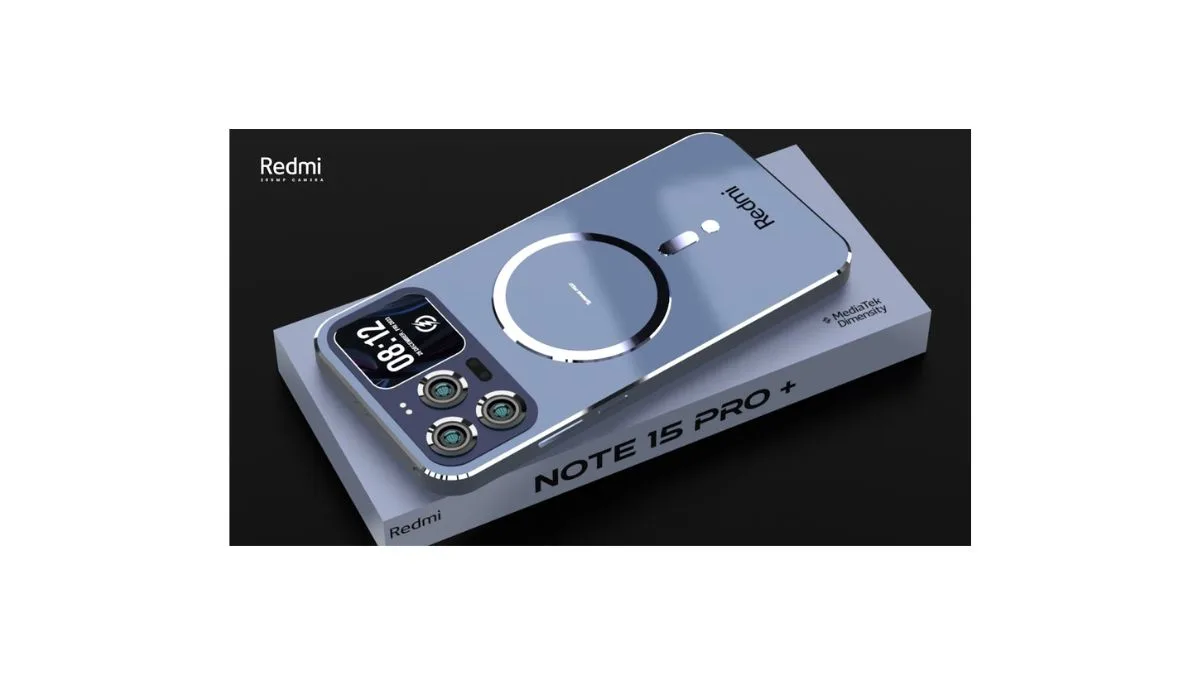
Redmi Note 15 Is About More Than a New Phone — It’s Xiaomi Testing the Limits of the Budget Flagship Formula
Every year, the Redmi Note launch pretends to be routine. And every year, it quietly reshapes India’s smartphone market.
The upcoming Redmi Note 15 series, expected to debut alongside the Redmi Pad 2 Pro in India, isn’t just another mid-cycle refresh. It arrives at a moment when the ₹15,000–₹25,000 segment is under real pressure—from rising component costs, longer upgrade cycles, and consumers who are no longer impressed by incremental spec bumps.
If Xiaomi gets the Note 15 right, it reinforces its dominance. If it doesn’t, rivals like Samsung, Motorola, and Realme are ready to pounce.
Why the Redmi Note 15 launch actually matters
The Redmi Note series has long been Xiaomi’s volume engine in India. For many buyers, this is the default upgrade choice—not because it’s flashy, but because it historically delivered the most hardware for the least money.
But 2025 is different.
Buyers are holding onto phones longer
“Flagship features” have trickled down faster than expected
Mid-range phones are being judged on longevity, not specs alone
The Redmi Note 15 isn’t just competing with last year’s Note—it’s competing with discounted flagships, exchange-driven deals, and increasingly capable rivals that promise cleaner software or better cameras.
This launch will test whether Xiaomi still understands the Indian mid-range buyer as well as it once did.
What to expect from the Redmi Note 15 series
While Xiaomi hasn’t officially confirmed specifications, the Redmi Note 15 lineup is expected to continue its familiar multi-model strategy—likely including a standard Note 15, a Pro variant, and possibly a Pro+ model.
The core expectations are clear:
A refined AMOLED display with high refresh rate, now considered non-negotiable
A performance-focused chipset tuned more for efficiency than raw benchmarks
Camera upgrades that prioritise consistency, not megapixel inflation
Fast charging improvements, even if battery capacity stays similar
What will matter more than individual specs is balance. Recent Redmi Notes have sometimes chased numbers—higher megapixels, faster charging—at the expense of camera reliability or thermal performance. The Note 15 has to feel polished, not just powerful.
Pricing will decide everything
Expected pricing for the Redmi Note 15 series is likely to start in the mid-teens, with higher-end variants pushing toward the ₹25,000 mark.
That’s where the real risk lies.
At those prices, Redmi is no longer competing only with budget phones. It’s competing with:
Older flagships on discount
“Clean Android” alternatives
Samsung’s aggressively priced Galaxy A-series
Motorola’s design-first mid-range phones
Xiaomi can’t rely on brand loyalty alone anymore. The Note 15 must justify its price through real-world performance, software stability, and long-term updates—areas where buyers have become far more critical.
Redmi Pad 2 Pro: a quiet but strategic move
The expected launch of the Redmi Pad 2 Pro alongside the Note 15 series is not accidental.
Tablets are slowly regaining relevance in India—for education, content consumption, and casual productivity. By pairing a mid-range tablet with its phone launch, Xiaomi is clearly aiming to strengthen its ecosystem play.
If priced aggressively, the Pad 2 Pro could appeal to:
Students looking for a large-screen companion
Families wanting a shared device
Users priced out of premium tablets
This also signals Xiaomi’s belief that India’s value-conscious buyers are ready to spend more—as long as the value proposition is obvious.
The bigger picture: Redmi’s moment of truth
The Redmi Note 15 launch will reveal whether Xiaomi is still leading the mid-range conversation—or merely reacting to it.
In the past, Redmi defined what buyers should expect at a given price. Today, expectations are already high. Cameras must be dependable. Software must age well. Performance must stay consistent after six months, not just on day one.
If the Note 15 series delivers refinement rather than gimmicks, it will remain the default recommendation for millions. If not, this could be the year Redmi finally feels real pressure in its safest segment.
Looking ahead
Expect the Redmi Note 15 series to launch in India soon, likely accompanied by aggressive early-bird pricing and online-first availability. But the real verdict won’t come from spec sheets or launch events—it will come six months later, when buyers decide whether the phone still feels worth what they paid.
In 2025, that’s the only metric that matters.