Bajaj Chetak C25 Electric Scooter: Price, Range, Features & Why It’s India’s Most Affordable Chetak
The 2026 Bajaj Chetak C25 is India’s most affordable electric scooter in the Chetak lineup, priced at just ₹91,399. Designed for urban commuters, it offers a claimed range of 113 km, a durable metal body, and practical features tailored for daily city use. While entry-level in price, the C25 maintains Bajaj’s legacy of quality, reliability, and comfort. With rapid charging, lightweight handling, and a refreshed design, it competes directly with Ola S1X and TVS iQube. For first-time EV buyers or anyone looking for a trusted, budget-friendly electric scooter, the Chetak C25 delivers exceptional value without compromising style or performance.
2026 Bajaj Chetak C25: Making Electric Scooters Truly Accessible in India
Bajaj Auto has taken a significant step in democratizing electric mobility with the launch of the 2026 Bajaj Chetak C25. Positioned as the most affordable model in the Chetak lineup, this scooter is a clear signal that EV adoption in India is moving beyond early adopters and tech enthusiasts into the mainstream urban market. Priced at ₹91,399 (ex-showroom), the C25 undercuts its higher-range siblings while still maintaining the core values of reliability, build quality, and city-focused performance that have made the Chetak brand a household name.
But affordability here does not just mean a lower price tag. It represents a careful balance between range, performance, design, and features to create an EV that appeals to practical urban commuters while keeping Bajaj’s manufacturing standards intact.
Making EVs Affordable Without Compromise
The Chetak C25 reflects a broader trend in the Indian EV market: manufacturers targeting price-sensitive buyers by introducing entry-level models. Companies like Ola Electric and Ather Energy have already launched sub-₹1 lakh scooters, and Bajaj’s entry signals that legacy automakers are now aggressively competing in this segment.
This strategy has multiple implications:
Volume Growth: By pricing below ₹1 lakh, Bajaj opens the EV market to first-time buyers who previously hesitated due to cost.
Urban Mobility Shift: The C25 is ideal for city commuting, offering a real-world range suitable for daily office runs, errands, and short trips.
Competitive Pressure: Legacy and startup EV makers alike are forced to innovate, either by reducing costs, improving features, or optimizing battery efficiency.
What Sets the Chetak C25 Apart
The C25 is not just a scaled-down version of its higher-range siblings. Bajaj has re-engineered several aspects to make this model both cost-effective and practical:
1. Battery & Charging
The C25 is powered by a 2.5 kWh NMC (Lithium Nickel Manganese Cobalt) battery, smaller than the 3.0–3.5 kWh packs in the 30 and 35 series. This makes the scooter lighter and cheaper while still offering 113 km of claimed range.
Charging efficiency is another highlight. The C25 reaches 80% charge in just 2 hours 15 minutes, faster than its siblings which take between 3 and 3.5 hours. In real-world urban commuting scenarios, this rapid top-up capability is a practical advantage for city riders who cannot always wait for a full charge overnight.
2. Performance & Top Speed
With a top speed of 55 km/h, the C25 is optimized for urban streets rather than open highways. While it cannot match the 63–73 km/h top speeds of the higher variants, the scooter’s motor tuning and lightweight design ensure smooth, predictable acceleration, making it an ideal choice for daily city commutes.
3. Design & Practical Features
Though more affordable, the C25 retains signature Chetak styling while introducing subtle but meaningful design tweaks:
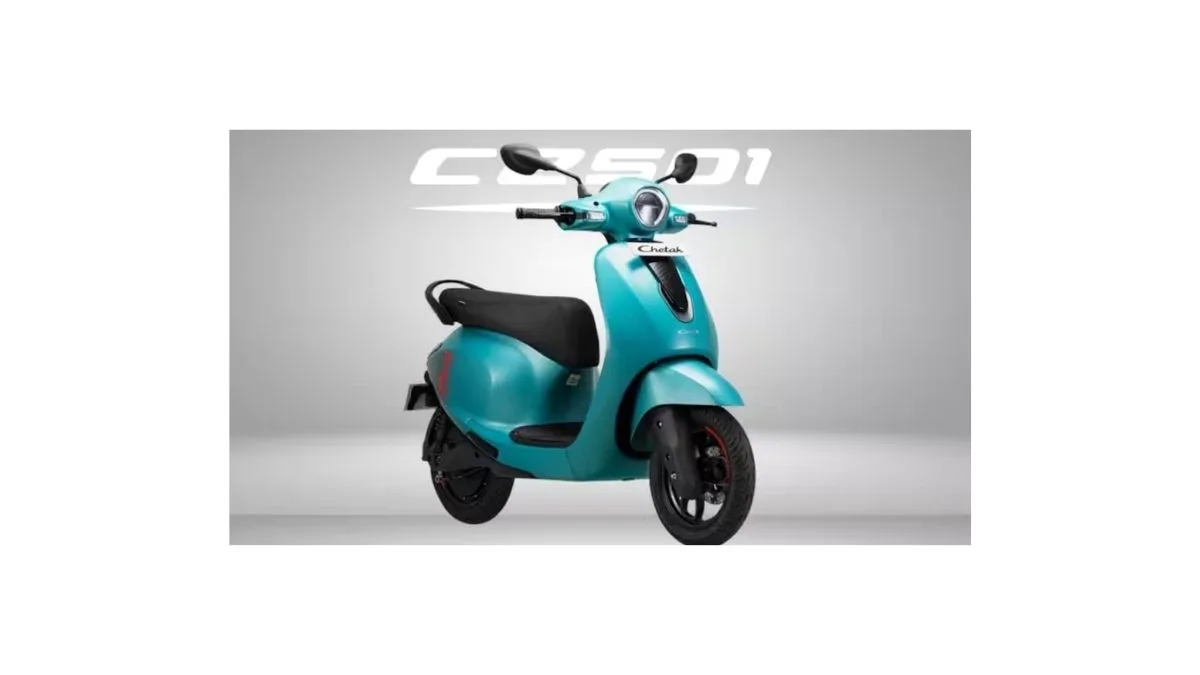
LED Headlamp & Sequential Blinkers: A refreshed front apron sets it apart visually.
Rear “Ice Cube” LED Strip: Replaces the dual cluster design of higher trims, providing a modern, minimalistic look.
Colour Options: Cyan, Red, Black, and White cater to mainstream buyers without overwhelming choices.
Feature-wise, the C25 comes with a colour LCD instrument cluster instead of the high-end TFT screens seen on the 35 series. Connectivity options like Bluetooth are absent in the base variant, reflecting a feature trade-off for affordability.
Price Advantage: Core Selling Point
Affordability is the C25’s strongest selling point. Compared to the 30 series (₹99,500) and the 35 series (₹102,500–₹122,500), the C25’s ₹91,399 ex-showroom price puts it in direct competition with emerging EV startups while leveraging Bajaj’s trusted brand and extensive service network.
This pricing strategy is significant for India’s EV ecosystem because it lowers the entry barrier, allowing more users to transition from petrol scooters to electric mobility.
Strategic Implications for the EV Market
The launch of the Bajaj Chetak C25 is more than just a new model it is a strategic statement:
Legacy Brands Are Catching Up: Bajaj is signaling that established manufacturers can combine brand trust with affordability to compete with nimble startups.
EV Adoption Will Accelerate: By introducing an entry-level model, Bajaj is effectively expanding the market to include budget-conscious urban commuters, a segment that forms the bulk of India’s two-wheeler sales.
Battery & Technology Standardization: Smaller battery packs and efficient charging demonstrate a practical approach to EV design less focus on maximum range, more on real-world usability.
Future Outlook
The Chetak C25 is likely to influence future EV strategies in India:
Competitors may launch even more affordable, city-focused scooters.
Bajaj could expand the C25 into regional variants or export models targeting cost-sensitive markets in Asia and Africa.
Its success could drive battery optimization and modular designs for future EVs, balancing cost, weight, and range.
For consumers, this model represents an accessible, reliable, and brand-backed option to adopt electric mobility without compromise on quality or design.
FAQ – 2026 Bajaj Chetak C25 Electric Scooter
What is the price of the 2026 Bajaj Chetak C25 in India?
The 2026 Bajaj Chetak C25 is priced at ₹91,399 (ex‑showroom), making it the most affordable model in the Chetak EV lineup and an attractive option for budget-conscious urban commuters.
What is the range of the 2026 Bajaj Chetak C25?
Equipped with a 2.5 kWh NMC battery, the 2026 Bajaj Chetak C25 delivers a claimed range of 113 km per full charge. Real-world city usage typically gives around 90–100 km, perfect for daily commuting.
How long does it take to charge the 2026 Bajaj Chetak C25?
The 2026 Bajaj Chetak C25 charges 0–80% in 2 hours 15 minutes and reaches a full charge in about 4 hours, making it convenient for overnight or daytime charging for urban riders.
What is the top speed of the 2026 Bajaj Chetak C25?
The 2026 Bajaj Chetak C25 has a top speed of 55 km/h, ideal for city traffic. It’s tuned for efficiency and smooth handling rather than high-speed highway performance.
What are the design highlights of the 2026 Bajaj Chetak C25?
The 2026 Bajaj Chetak C25 features:
LED headlamp with sequential blinkers
Distinctive front apron
Rear ‘Ice Cube’ LED light
Four colors: Cyan, Red, Black, White
These updates give it a modern look while maintaining the classic Chetak aesthetic.
What features does the 2026 Bajaj Chetak C25 offer?
Key features include:
Color LCD instrument cluster
Hill-hold assist and reverse mode
Under-seat storage for daily use
Connectivity features like Bluetooth are available only on higher-end Chetak variants.
Who is the Bajaj Chetak C25 ideal for?
The Bajaj Chetak C25 is perfect for:
First-time EV buyers
Urban commuters seeking reliability
- Budget-conscious riders who want Bajaj quality without spending on premium trims
How does the 2026 Bajaj Chetak C25 compare with other Chetak models?
| Model | Price (Ex-showroom) | Battery | Range | Top Speed |
|---|---|---|---|---|
| C25 | ₹91,399 | 2.5 kWh | 113 km | 55 km/h |
| 3001 | ₹99,500 | 3.0 kWh | 127 km | 63 km/h |
| 3501 | ₹122,500 | 3.5 kWh | 153 km | 73 km/h |
The C25 is entry-level and city-focused, while higher models offer longer range and premium features.
Is the 2026 Bajaj Chetak C25 suitable for long-distance rides?
No. The Bajaj Chetak C25 is designed for city commuting, short trips, and daily errands. It’s not intended for highways or long-distance travel.
Why is the 2026 Bajaj Chetak C25 important for India’s EV market?
The Bajaj Chetak C25 makes electric mobility accessible to a wider audience. Its combination of affordability, reliability, and practical features can accelerate EV adoption among budget-conscious urban riders and expand the EV market in India.