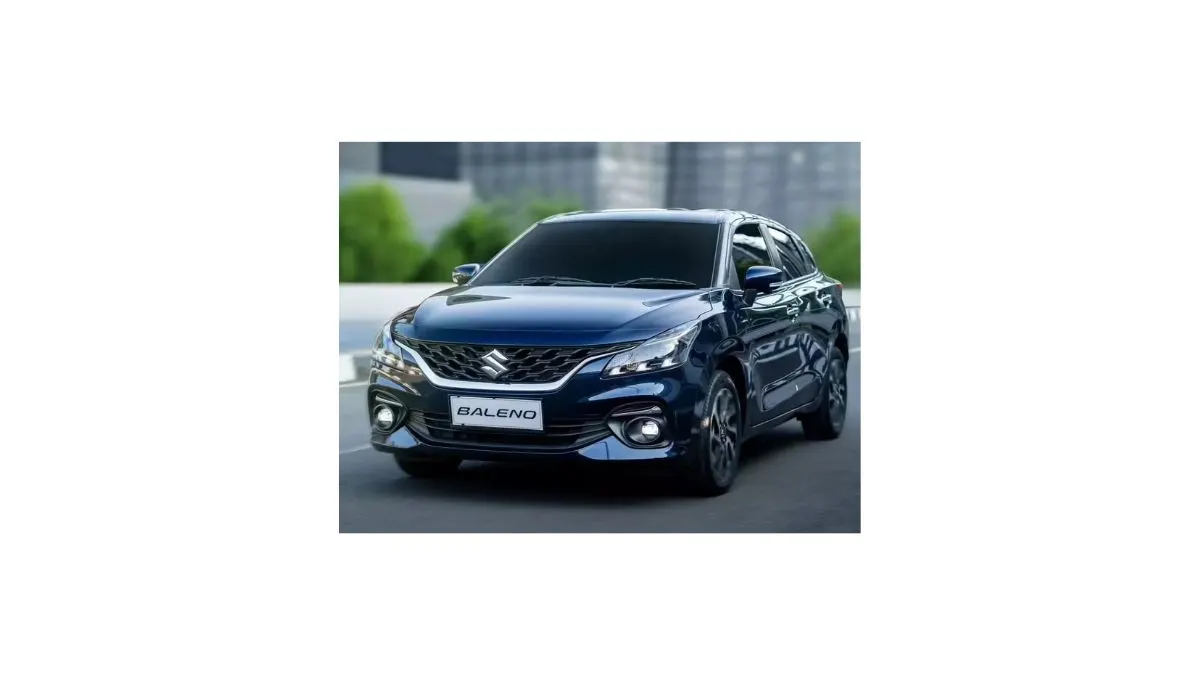
Why the India-Made Suzuki Baleno Scored Only 2 Stars in Latin NCAP Tests
When an Indian-manufactured car goes up against an international crash test regime, the headline result is rarely the whole story. The Suzuki Baleno’s recent 2-star rating from Latin NCAP may look underwhelming at first glance—especially given the presence of six airbags—but the outcome reveals deeper tensions in how global safety expectations are evolving, and where mass-market cars from India still fall short.
This isn’t just about one hatchback or one scorecard. It’s about the widening gap between passive safety hardware and active safety intelligence, and how that gap increasingly determines a car’s real-world safety credibility.
Why a 2-Star Rating in 2025 Feels More Serious Than It Sounds
A decade ago, a stable bodyshell and a handful of airbags could earn manufacturers respectable safety praise. In 2025, that’s no longer enough. Latin NCAP—like Euro NCAP—now places significant weight on how well a car avoids crashes in the first place, not just how it protects occupants after impact.
The Baleno’s results underline this shift clearly:
Adult occupant protection: 79%
Child occupant protection: 65%
These are not disastrous numbers. In fact, they suggest the core structure and restraint systems are fundamentally sound. The problem lies elsewhere.
Strong Structure, Familiar Weak Spots
Crash test data shows that the Suzuki Baleno performed competently in frontal and side impacts. Head and neck protection for front occupants was rated good, and side impact performance was largely acceptable. Rear whiplash protection was also rated well—an area often overlooked in popular discussions.
However, familiar compromises emerged:
Marginal knee protection due to contact risks with underlying structures
Inconsistent protection across pedestrian impact zones
Limited coverage of advanced driver assistance systems (ADAS)
In isolation, none of these are deal-breakers. Together, they cap the car’s safety ceiling in modern assessments.
Child Safety: Technically Capable, Practically Limited
The Baleno’s child occupant score tells a nuanced story. Protection levels for child dummies during frontal and side tests were rated high, thanks to rearward-facing child seats and ISOFIX anchorages. The car also meets i-Size norms—an important benchmark.
But installation limitations across seating positions dragged the score down. This highlights a subtle but important issue: compliance does not always equal convenience. A car can meet regulations yet still be less forgiving in real-world child seat use, which NCAP protocols now penalise more strictly.
Where the Suzuki Baleno Really Loses Ground: Active Safety
The most significant factor behind the 2-star rating is the Baleno’s limited safety assist package.
While electronic stability control and seatbelt reminders are present, the absence of features such as:
Autonomous emergency braking
Lane-keeping assistance
Blind spot monitoring
Speed assistance systems
has a disproportionate impact on modern NCAP scores.
This reflects a broader industry reality: airbags protect you once something has gone wrong; ADAS tries to ensure it doesn’t go wrong at all. Regulators and crash test bodies are now unapologetically prioritising the latter.
Pedestrian Safety: A Growing Global Priority
Pedestrian protection remains a weak point. While the Suzuki Baleno complies with UN127 norms and offers decent lower-leg protection, upper-leg and A-pillar performance pulled scores down.
In markets with dense urban traffic—ironically, like India—this area is becoming increasingly important. Yet it remains one of the least addressed aspects in affordable car design.
What This Means for Indian Buyers (and What It Doesn’t)
It’s crucial to note that Latin NCAP results apply only to Latin American market cars, and specifications may differ from India-bound models. This result does not automatically define the safety level of the Suzuki Baleno sold in India.
However, it does raise an uncomfortable but necessary question:
If an export-spec, six-airbag-equipped car still struggles to move beyond two stars internationally, how future-ready is the underlying platform?
The Bigger Picture: Safety Is No Longer Modular
The Suzuki Baleno’s performance reflects an industry caught mid-transition. Adding airbags and reinforcing structures is no longer enough to satisfy global benchmarks. Safety is becoming systemic, not modular.
Manufacturers that want higher ratings—and long-term trust—will need to:
Integrate ADAS at lower price points
Improve pedestrian impact engineering
Design interiors that support error-free child seat installation
Think beyond regulation compliance toward scenario-based safety
Final Take: Not a Failure, But a Warning Sign
The India-made Suzuki Baleno’s 2-star Latin NCAP rating isn’t a collapse of engineering competence. It’s a signal that the rules of the safety game have changed.
Cars that rely primarily on passive protection will increasingly find themselves capped in global evaluations, regardless of structural strength or airbag count. For manufacturers—and consumers alike—the message is clear: the future of safety lies not just in surviving crashes, but in preventing them.
And in that future, incremental upgrades may no longer be enough.