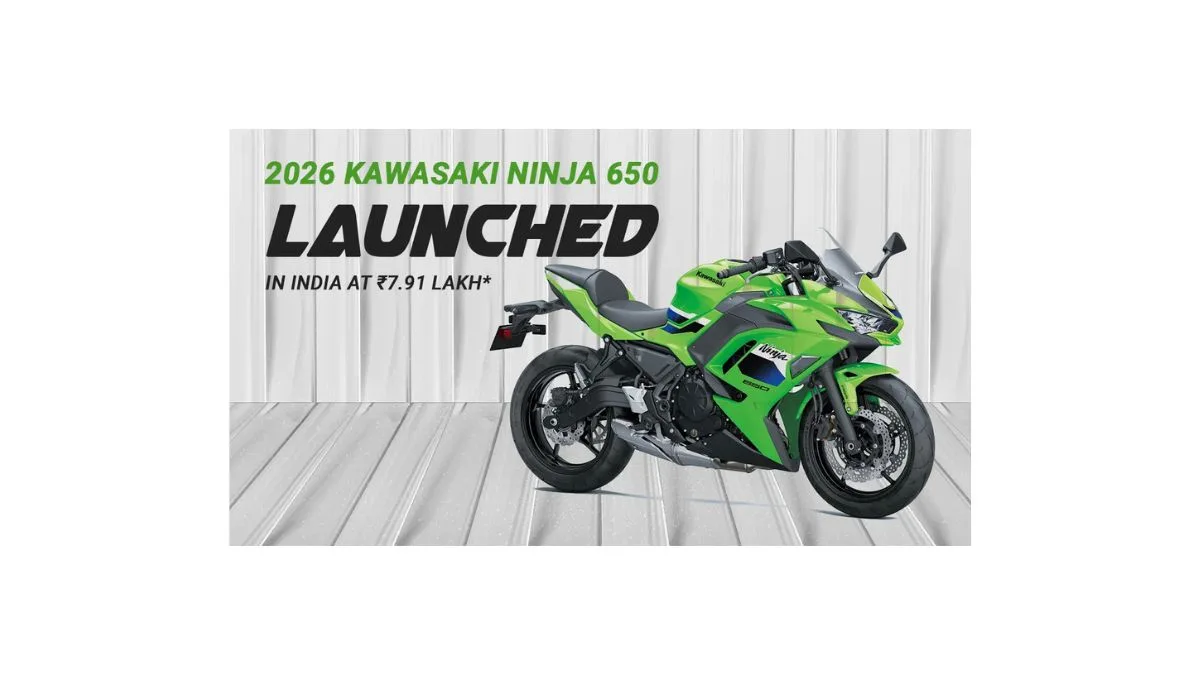
2026 Kawasaki Ninja 650 Review: E20-Ready, Tech-Packed, and Unbeatable at Rs 7.91 Lakh

2026 Kawasaki Ninja 650 in bold lime green on Indian road, showcasing aggressive styling, TFT display, and E20-compliant engine

2026 Kawasaki Ninja 650: Smart, Powerful, and India’s Most Versatile Middleweight Sportbike

The 2026 Kawasaki Ninja 650 is back, smarter, sleeker, and more fuel-efficient than ever. Now E20-compliant, this 649cc middleweight sports tourer delivers 68hp of punchy performance while keeping Indian roads rider-friendly. With a 4.3-inch full-color TFT display, smartphone connectivity via Kawasaki’s Rideology app, and switchable traction control, the Ninja 650 blends technology with thrill. Its refreshed lime green livery and aggressive styling turn heads, while dual-channel ABS and a refined suspension ensure confidence on every ride. Priced at Rs 7.91 lakh, it undercuts rivals like the Honda CBR650R, making it India’s most versatile and value-packed sportbike today.

2026 Kawasaki Ninja 650: Middleweight Sports Tourer Gets Smarter, Cleaner, and More Competitive

Kawasaki has quietly raised the bar in India’s middleweight sports segment with the launch of the 2026 Ninja 650, now priced at Rs 7.91 lakh ex-showroom Delhi. While the incremental price hike of Rs 14,000 over the previous model may seem modest, the updates under the skin make this one of the most compelling choices for riders seeking a balance between performance, technology, and daily usability.

Meeting Modern Fuel and Emissions Demands

The headline upgrade for the 2026 Ninja 650 is its E20-compliant engine. With rising ethanol blends in Indian fuel and tightening emission regulations, this update ensures that the Ninja 650 remains future-proof, without compromising performance. The 649cc parallel-twin continues to deliver a satisfying 68hp at 8,000rpm and 62.1Nm of torque at 6,700rpm, giving riders brisk acceleration while maintaining manageable handling for urban or touring scenarios.

For middleweight sportbikes, maintaining such balance is critical. Kawasaki’s choice of an assist-and-slipper clutch paired with a 6-speed gearbox ensures smooth downshifts and reduces rear-wheel chatter a feature that enhances both safety and rider confidence during spirited riding.

Refined Chassis and Rider Technology

Beyond the engine, the 2026 Ninja 650 retains its well-proven suspension and braking setup: a 41mm telescopic fork up front, a monoshock at the rear, twin 300mm front discs, a 220mm rear disc, and dual-channel ABS. While the hardware remains largely unchanged, it’s the electronics that give this model a modern edge. Kawasaki’s Traction Control (KTRC) can be switched on or off depending on riding conditions, offering an extra layer of security without intruding on rider engagement.

The 4.3-inch TFT display is another thoughtful inclusion. Riders can now connect their smartphones via Kawasaki’s Rideology app, gaining access to navigation, ride logs, and real-time data. In a segment where most rivals still offer basic instrumentation, this makes the Ninja 650 stand out as a tech-forward option.

Styling That Continues to Impress

Visually, the 2026 Kawasaki Ninja 650 model carries forward the internationally acclaimed Ninja styling with a refreshed lime green livery. The colour choice may be familiar, but its bold, neon finish ensures that the bike commands attention both on the road and in traffic a subtle but effective marketing tool in a segment where brand presence is key.

Value Proposition Against Rivals

At Rs 7.91 lakh, the Ninja 650 undercuts its closest competitor, the Honda CBR650R (Rs 11.16 lakh), by a significant margin. For buyers, this means access to Kawasaki’s legendary build quality and riding dynamics at a price that leaves room for accessories, gear, or insurance. While some may argue that the Ninja lacks the raw 100+hp punch of larger liter-class sportbikes, its versatility and lower running costs make it arguably more practical for Indian roads.

The Road Ahead

The 2026 Kawasaki Ninja 650 signals Kawasaki’s intent to consolidate its hold over the middleweight sports segment in India. By aligning the model with modern fuel standards, adding rider-focused electronics, and keeping pricing competitive, Kawasaki ensures that the Ninja 650 remains relevant for both new riders and seasoned enthusiasts.

Looking forward, the E20 update opens the door for future hybrid or even more fuel-efficient iterations, while Kawasaki’s continued focus on connected technology hints at a roadmap where middleweight sportbikes may become smarter, safer, and more integrated with daily life. For riders, this isn’t just a facelift it’s a subtle evolution that strengthens the Ninja’s reputation as a versatile, enjoyable, and sensible sports machine.

People Also Ask – 2026 Kawasaki Ninja 650

1. What is the price of the 2026 Kawasaki Ninja 650 in India?
The 2026 Ninja 650 is priced at Rs 7.91 lakh ex-showroom Delhi, making it one of the most competitively priced middleweight sportbikes in India, significantly undercutting rivals like the Honda CBR650R.

2. What are the key updates in the 2026 Ninja 650?
The bike features an E20-compliant 649cc parallel-twin engine, updated TFT display with smartphone connectivity, and switchable Kawasaki Traction Control (KTRC). It also gets refreshed livery and minor styling tweaks.

3. How much power and torque does the Ninja 650 produce?
It delivers 68hp at 8,000rpm and 62.1Nm of torque at 6,700rpm, paired with a smooth 6-speed gearbox and assist-and-slipper clutch for confident riding.

4. Is the 2026 Ninja 650 suitable for city and highway rides?
Yes, it strikes a perfect balance between sporty performance and everyday usability. Dual-channel ABS, refined suspension, and manageable ergonomics make it ideal for both urban commutes and long highway tours.

5. What colours are available for the 2026 Ninja 650?
Currently, the bike comes in lime green with refreshed graphics, maintaining Kawasaki’s iconic look while standing out in traffic for safety and style.

6. How does the Ninja 650 compare with competitors?
Compared to rivals like the Honda CBR650R and Yamaha R7, the Ninja 650 offers better value for money, advanced tech, and a more versatile engine for Indian conditions, making it a strong choice for both new and experienced riders.

Kawasaki Ninja 300: The Twin-Cylinder Sports Bike That Still Makes Sense in 2026

Kawasaki Ninja 300 sports bike in iconic green color showcasing aerodynamic fairing, twin-cylinder engine, and premium sporty design

Kawasaki Ninja 300 Review: Price, Performance, Mileage, Specs & Real-World Verdict

In a market flooded with high-tech single-cylinder sport bikes, the Kawasaki Ninja 300 continues to hold a unique position. It may not chase headline-grabbing horsepower figures, but it delivers something increasingly rare: smoothness, balance, and real-world usability. Powered by a refined parallel-twin engine, the Ninja 300 remains one of the most approachable fully-faired sports bikes for Indian riders who want performance without punishment. This article breaks down why the Ninja 300 still matters, who it is truly for, and whether it justifies its premium price in 2026.


Why the Kawasaki Ninja 300 Still Matters Today

The Indian motorcycle market has evolved rapidly. Feature-loaded bikes with TFT screens, riding modes, and aggressive pricing dominate conversations. Yet, despite this shift, the Kawasaki Ninja 300 refuses to fade away.

The reason is simple: engine character.

Unlike most rivals that rely on large single-cylinder motors, the Kawasaki Ninja 300 uses a 296cc parallel-twin engine, delivering a smoother, more refined riding experience. For riders upgrading from 150cc or 200cc motorcycles, this refinement feels transformational.

This bike is not about raw numbers. It is about how effortlessly it delivers performance.


Engine & Performance: Smoothness Over Shock Value

At the heart of the Kawasaki Ninja 300 lies a liquid-cooled, parallel-twin engine producing around 39 PS of power and 26 Nm of torque. On paper, these numbers may seem modest compared to newer competitors, but on the road, the story changes.

What makes the engine special?

  • Minimal vibrations even at high RPMs

  • Linear power delivery ideal for city and highway use

  • Effortless cruising at triple-digit speeds

  • A refined exhaust note that feels premium, not loud

The Ninja 300 thrives between 6,000–10,000 rpm, where it feels alive yet never intimidating. This makes it an excellent choice for riders who want to enjoy speed without constantly wrestling the throttle.


Real-World Riding Experience

The Ninja 300 is one of those rare sport bikes that feels comfortable in daily use.

City Riding

Despite its fully-faired design, the Ninja 300 handles traffic surprisingly well. The clutch is light, the throttle response is predictable, and the heat management is far better than many single-cylinder rivals.

Highway Touring

This is where the Ninja 300 truly shines. The bike can cruise comfortably at 120 km/h all day, with enough power left for quick overtakes. The stability at high speeds inspires confidence, especially for new sport-bike riders.


Comfort & Ergonomics: Built for Indian Roads

Unlike track-focused sport bikes, the Ninja 300 adopts a balanced riding posture.

  • Slightly committed but not aggressive

  • Comfortable seat cushioning

  • Manageable seat height for most riders

  • Decent wind protection from the fairing

This makes it suitable not just for weekend rides but also for longer touring journeys.


Braking & Safety

Safety is one area where Kawasaki has always played it safe, in a good way.

  • Front and rear disc brakes

  • Dual-channel ABS as standard

  • Predictable braking bite

The braking setup is tuned more for control than outright aggression, which suits the Ninja 300’s friendly nature.


Suspension & Handling

The Ninja 300 uses a telescopic front fork and a rear monoshock suspension setup. While it may not feature adjustable USD forks, the tuning is spot on for Indian road conditions.

  • Stable at high speeds

  • Forgiving over bad roads

  • Neutral handling characteristics

This bike encourages confidence, especially for riders stepping into the sport-bike segment for the first time.


Features & Instrument Cluster

The Ninja 300 keeps things simple.

  • Semi-digital instrument console

  • Analog tachometer with digital speed readout

  • Gear position indicator

  • Fuel gauge and trip meters

While it lacks modern features like Bluetooth connectivity or ride modes, it compensates with reliability and ease of use.


Mileage & Fuel Efficiency

For a twin-cylinder sports bike, the Ninja 300 delivers respectable fuel efficiency.

  • City mileage: 22–25 km/l

  • Highway mileage: 28–32 km/l

With a 17-litre fuel tank, long touring stretches become practical without frequent fuel stops.


Kawasaki Ninja 300 Price in India

The Ninja 300 is positioned as a premium offering.

  • Ex-showroom price: Around ₹3.4 lakh

  • On-road price: ₹3.8–4.0 lakh (varies by state)

Yes, it is expensive compared to rivals. But what you pay for is refinement, engine quality, and long-term reliability.


Kawasaki Ninja 300 vs Rivals

Compared to KTM RC 390

  • RC 390 is faster and more aggressive

  • Ninja 300 is smoother and more comfortable

Compared to Yamaha R3

  • Similar refinement

  • Ninja 300 often offers better availability and service reach

Compared to Aprilia RS 457

  • RS 457 is more powerful

  • Ninja 300 is more beginner-friendly and predictable


Who Should Buy the Kawasaki Ninja 300?

The Ninja 300 is ideal for:

  • Riders upgrading from 150–250cc bikes

  • Those who prioritize refinement over raw performance

  • Riders planning highway touring

  • Buyers who want a stress-free ownership experience

This is not a bike for spec-sheet warriors. It is for riders who value how a bike feels every single day.


Ownership, Reliability & Service

Kawasaki’s engines are known for durability. With proper maintenance, the Kawasaki Ninja 300 can easily clock high mileage without major issues.

  • Reliable engine

  • Predictable service intervals

  • Premium but consistent service costs


Final Verdict: Is the Kawasaki Ninja 300 Still Worth It?

The Kawasaki Ninja 300 does not try to be the most powerful or the most feature-loaded bike in its segment. Instead, it focuses on doing the basics exceptionally well.

It delivers:

  • A smooth, refined engine

  • Comfortable ergonomics

  • Real-world usability

  • Premium build quality

If you want a sports bike that feels mature, balanced, and enjoyable rather than overwhelming, the Ninja 300 still deserves serious consideration in 2026.

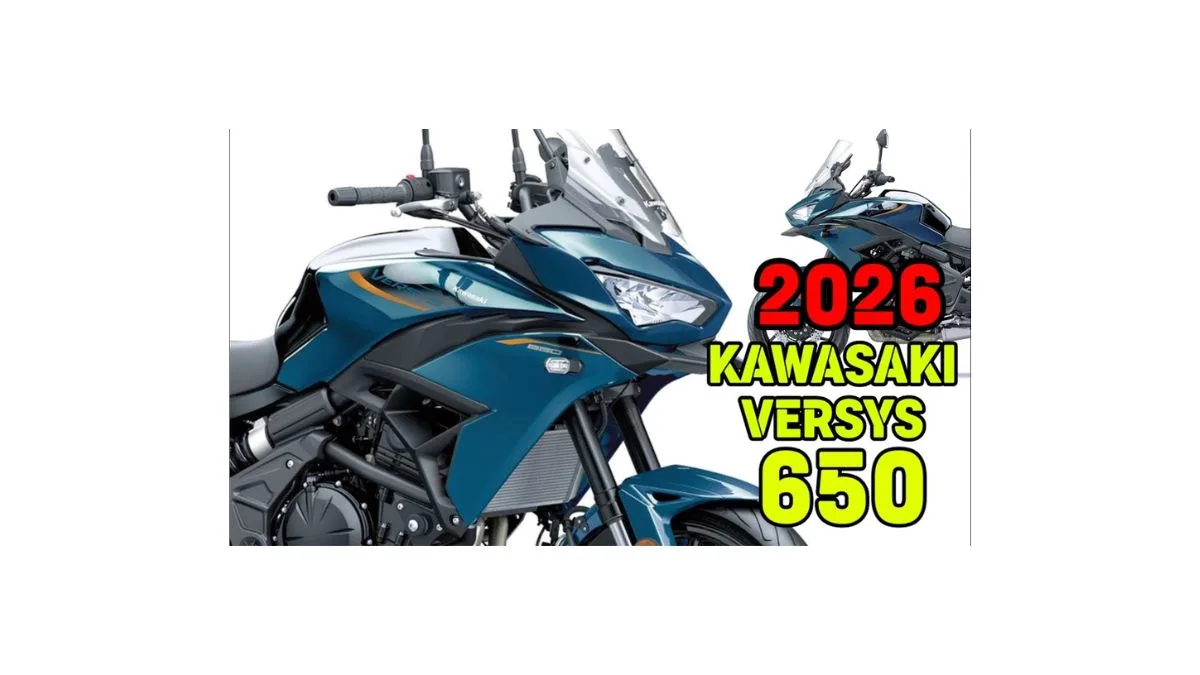
2026 Kawasaki Versys 650 Launched in India: Why This Subtle Update Is More Important Than It Looks

2026 Kawasaki Versys 650 adventure touring motorcycle launched in India with E20 engine and updated colour scheme

2026 Kawasaki Versys 650 Launched in India: The Update Touring Riders Were Waiting For

Adventure touring motorcycles rarely grab headlines for incremental updates, but the 2026 Kawasaki Versys 650 deserves a closer look. Launched in India at ₹8.63 lakh (ex-showroom), this update isn’t about radical styling or headline-grabbing tech. Instead, it reflects Kawasaki’s quiet understanding of what long-distance riders actually need—comfort that lasts, mechanical refinement, and readiness for India’s evolving fuel norms. With E20 compatibility now in place and its proven touring DNA untouched, the Versys 650 continues to position itself as a dependable mile-muncher rather than a spec-sheet showpiece. For riders who spend more time on highways than at coffee stops, this launch carries more significance than it first suggests.

Why this update matters more than it seems

At a time when many manufacturers are overhauling models with aggressive styling or tech-heavy refreshes, Kawasaki has taken a conservative route. The Versys 650 remains largely unchanged in design, performance, and ergonomics—and that’s deliberate. This motorcycle already has a loyal audience: riders who value all-day comfort, proven reliability, and real-world touring ability over flashy updates.

The most important change is invisible to the eye: E20 fuel compatibility. With India steadily moving toward higher ethanol-blended fuels, this update future-proofs the Versys 650 against regulatory changes. For buyers planning to keep their motorcycle for years, this matters far more than cosmetic upgrades.

Design philosophy: Evolution, not reinvention

The new grey-and-black paint scheme with green highlights refreshes the bike without disrupting its identity. The tall, upright stance, long-travel suspension, and relaxed ergonomics remain untouched—key reasons why the Versys 650 is often described as one of the most comfortable middleweight tourers on Indian highways.

Kawasaki has wisely retained features that genuinely enhance riding experience:

  • 4.3-inch TFT display with excellent visibility

  • Adjustable windscreen with four height settings

  • Dual-channel ABS

  • Traction control with two modes, useful for varying road conditions

This is a motorcycle designed to reduce fatigue on long rides, not overwhelm the rider with unnecessary electronics.

Engine and performance: Proven, predictable, dependable

Powering the 2026 Versys 650 is the familiar 649cc liquid-cooled parallel-twin engine, producing 67hp and 61Nm. On paper, these numbers may not excite spec-sheet hunters, but in practice, this engine is smooth, tractable, and well-suited to Indian touring conditions.

With a kerb weight of 220kg and 170mm ground clearance, the Versys 650 strikes a careful balance. It’s stable at highway speeds, confident on broken roads, and forgiving for riders transitioning from smaller motorcycles. The 21-litre fuel tank further reinforces its touring credentials, reducing range anxiety on long routes.

The bigger picture: Kawasaki’s India strategy

The incremental price hike reflects rising input costs and compliance updates rather than added features. Kawasaki seems focused on maintaining consistency and reliability, two qualities that have helped the Versys 650 stand its ground against newer rivals.

In a segment increasingly crowded with feature-rich alternatives, Kawasaki is betting that experienced riders will still choose refinement, comfort, and proven engineering over novelty.

What this means for buyers

If you were waiting for a radical overhaul, the 2026 Versys 650 may disappoint. But if you want a motorcycle that:

  • Is future-ready for India’s fuel norms

  • Excels at long-distance touring

  • Offers predictable performance and comfort

…this update strengthens the Versys 650’s case rather than weakens it.

Bookings are now open across Kawasaki dealerships, with deliveries expected from January 2026. For riders who understand what the Versys stands for, this isn’t just another model-year update—it’s reassurance that Kawasaki isn’t fixing what was never broken.

Conclusion

The 2026 Kawasaki Versys 650 doesn’t try to reinvent itself—and that’s exactly why it works. In a segment increasingly obsessed with flashy updates and feature overload, Kawasaki has focused on longevity, real-world usability, and future compliance. The addition of E20 fuel compatibility ensures peace of mind for long-term owners, while the familiar engine, ergonomics, and touring-focused hardware continue to deliver where it matters most: on long Indian highways. Yes, the price has gone up slightly, but so has the bike’s relevance in a changing regulatory landscape. For riders who value comfort, reliability, and proven performance over short-lived novelty, the Versys 650 remains one of the most sensible middleweight adventure-tourers you can buy in India today.