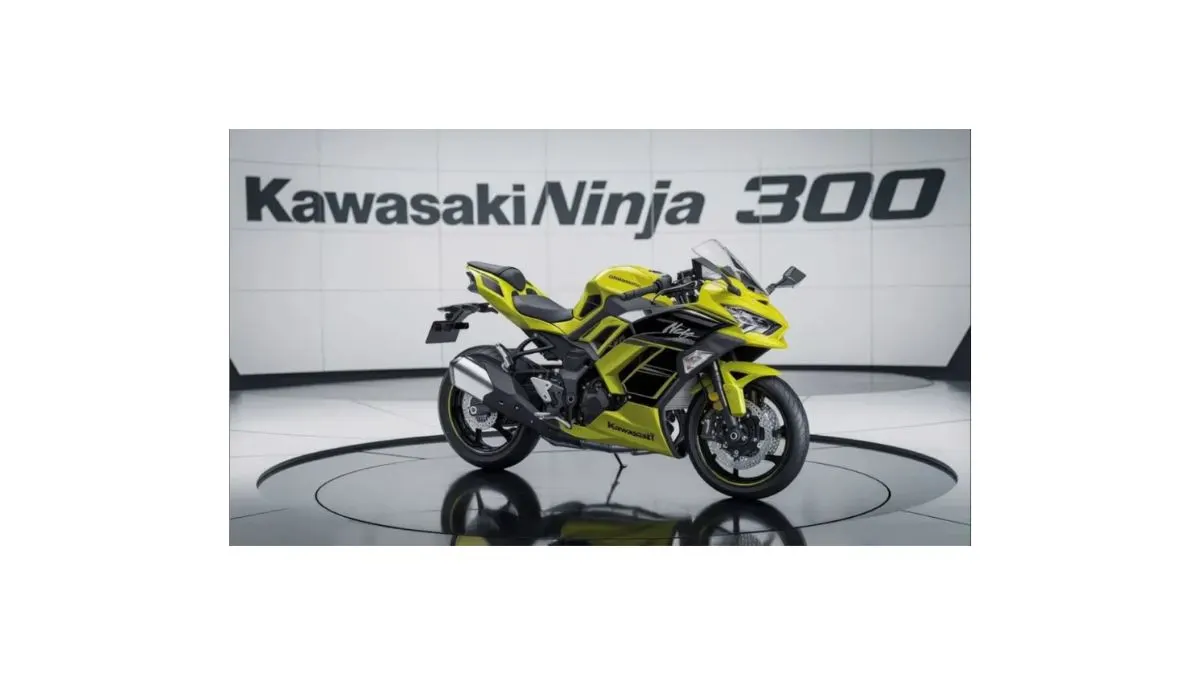
2026 Kawasaki Ninja 300 Launched: New Colours, Rs 3.17 Lakh Price, Same Powerful Engine

2026 Kawasaki Ninja 300 in India – Fresh Lime Green and Candy Lime Green/Ebony colours, aggressive sporty design

2026 Kawasaki Ninja 300 Launched in India at Rs 3.17 Lakh – New Colours & Refreshed Design

The 2026 Kawasaki Ninja 300 is officially launched in India with a starting price of Rs 3.17 lakh (ex-showroom). While the mechanicals remain largely unchanged, Kawasaki has focused on giving the Ninja 300 a visually refreshed look.

The new model comes in Lime Green and Candy Lime Green/Ebony, replacing the Moondust Gray from 2025. The bike features updated graphics, refined lettering, and a sportier profile, making it stand out in the 300cc segment. Key design elements include aggressive dual projector headlights, a floating-style windscreen, sculpted fuel tank, split seats, and upswept exhaust.

The Ninja 300 continues to compete with Yamaha R3, Aprilia RS 457, TVS Apache RR 310, and KTM RC 390, offering reliable performance, beginner-friendly handling, and a bold, sporty design. With its combination of proven performance and fresh aesthetics, the 2026 Ninja 300 remains a strong contender for riders looking for style and substance in the middleweight sportbike segment.


What’s New in the 2026 Kawasaki Ninja 300?

The 2026 Kawasaki Ninja 300 focuses primarily on cosmetic updates:

  • New Colour Options: Lime Green and Candy Lime Green/Ebony

  • Updated Graphics: Cleaner, more refined lines enhancing the sporty look

  • Reduced Lettering: For a sleeker, less cluttered appearance

  • Dynamic Contrast: Green panels across the fuel tank, front cowl, and underbody panels highlight the bike’s muscular design

  • Core Features: Dual projector headlights, floating windscreen, split seats, upswept exhaust, sculpted side fairings

Despite the refreshed look, the mechanical specifications remain the same as the previous year’s model, keeping the Ninja 300 familiar and reliable for current and new riders.


Engine & Performance

The 2026 Kawasaki Ninja 300 retains the 296 cc liquid-cooled parallel-twin engine:

  • Power: 39 PS @ 11,000 rpm

  • Torque: 26.1 Nm @ 10,000 rpm

  • Transmission: 6-speed return shift gearbox

  • Assist & Slipper Clutch: Standard for smoother downshifts

  • Fuel Efficiency: Economical riding indicator included

Additional performance features:

  • Dual Throttle Valves: For smoother acceleration and improved torque delivery

  • Lightweight Chassis: Steel-tube diamond frame for stability and rigidity

  • Telescopic Forks (Front) & Gas-Charged Monoshock (Rear): Optimized for handling and comfort

The Ninja 300 provides a sporty yet beginner-friendly riding experience, making it suitable for both new and experienced riders.


Design & Features

The 2026 Kawasaki Ninja 300 offers a sporty, aggressive stance:

  • Headlights: Dual projector setup

  • Windscreen: Floating-style for better aerodynamics

  • Seats: Split design with ergonomic cushioning

  • Exhaust: Upswept, enhancing sporty aesthetics

  • Side Fairings: Layered and sculpted for muscular appearance

  • Instrument Cluster: Analogue-style tachometer with multi-function LCD

  • Fuel Tank: Sculpted for comfort and aggressive riding posture


Colours & Graphics

Colour OptionKey Features
Lime GreenKawasaki signature green, white & blue graphics, refined lettering
Candy Lime Green/EbonyContrasting green and ebony panels for a dynamic look
  • The Moondust Gray from 2025 has been removed

  • Graphics are more polished, enhancing the bike’s sporty appeal


Suspension & Braking

  • Front Suspension: Telescopic forks

  • Rear Suspension: Gas-charged monoshock

  • Front Brake: 290 mm petal disc

  • Rear Brake: 220 mm petal disc

  • Chassis: Steel-tube diamond frame

  • Tyres: Sporty radials for improved grip and handling


Competitors Comparison

ModelEnginePowerKey Feature
Kawasaki Ninja 300296 cc39 PSRefreshed colours, dual throttle valves
Yamaha YZF-R3321 cc42 PSFully digital LCD, slightly higher power
Aprilia RS 457457 cc47 PSRide-by-wire, traction control, TFT screen
KTM RC 390373 cc44 PSLightweight, aggressive sportbike features
TVS Apache RR 310312 cc34 PSTFT screen, modern electronics
  • Ninja 300 Advantage: Sleek refreshed design, proven engine, beginner-friendly handling

  • Competitor Advantage: More advanced electronics and power in Yamaha R3, Aprilia RS 457, and KTM RC 390


Pros & Cons

Pros:

  • Refreshed sporty design with updated graphics

  • Proven engine reliability

  • Beginner-friendly handling

  • Assist & slipper clutch

  • Comfortable split seats and ergonomic riding posture

Cons:

  • No major mechanical updates

  • Lacks TFT screen or ride modes

  • Limited colour options compared to previous model


FAQs / Featured Snippet Ready

Q1: What is the ex-showroom price of the 2026 Kawasaki Ninja 300?
A: Rs 3.17 lakh (India).

Q2: What colours are available?
A: Lime Green and Candy Lime Green/Ebony.

Q3: Has the engine been updated?
A: No, the 296 cc parallel-twin engine remains unchanged.

Q4: Is the 2026 Kawasaki Ninja 300 suitable for beginners?
A: Yes, it offers manageable power and beginner-friendly handling.

Q5: How does it compare with Yamaha R3 or Aprilia RS 457?
A: Slightly less powerful but offers proven reliability and a refreshed sporty look at a competitive price.

Kawasaki Ninja 300: The Twin-Cylinder Sports Bike That Still Makes Sense in 2026

Kawasaki Ninja 300 sports bike in iconic green color showcasing aerodynamic fairing, twin-cylinder engine, and premium sporty design

Kawasaki Ninja 300 Review: Price, Performance, Mileage, Specs & Real-World Verdict

In a market flooded with high-tech single-cylinder sport bikes, the Kawasaki Ninja 300 continues to hold a unique position. It may not chase headline-grabbing horsepower figures, but it delivers something increasingly rare: smoothness, balance, and real-world usability. Powered by a refined parallel-twin engine, the Ninja 300 remains one of the most approachable fully-faired sports bikes for Indian riders who want performance without punishment. This article breaks down why the Ninja 300 still matters, who it is truly for, and whether it justifies its premium price in 2026.


Why the Kawasaki Ninja 300 Still Matters Today

The Indian motorcycle market has evolved rapidly. Feature-loaded bikes with TFT screens, riding modes, and aggressive pricing dominate conversations. Yet, despite this shift, the Kawasaki Ninja 300 refuses to fade away.

The reason is simple: engine character.

Unlike most rivals that rely on large single-cylinder motors, the Kawasaki Ninja 300 uses a 296cc parallel-twin engine, delivering a smoother, more refined riding experience. For riders upgrading from 150cc or 200cc motorcycles, this refinement feels transformational.

This bike is not about raw numbers. It is about how effortlessly it delivers performance.


Engine & Performance: Smoothness Over Shock Value

At the heart of the Kawasaki Ninja 300 lies a liquid-cooled, parallel-twin engine producing around 39 PS of power and 26 Nm of torque. On paper, these numbers may seem modest compared to newer competitors, but on the road, the story changes.

What makes the engine special?

  • Minimal vibrations even at high RPMs

  • Linear power delivery ideal for city and highway use

  • Effortless cruising at triple-digit speeds

  • A refined exhaust note that feels premium, not loud

The Ninja 300 thrives between 6,000–10,000 rpm, where it feels alive yet never intimidating. This makes it an excellent choice for riders who want to enjoy speed without constantly wrestling the throttle.


Real-World Riding Experience

The Ninja 300 is one of those rare sport bikes that feels comfortable in daily use.

City Riding

Despite its fully-faired design, the Ninja 300 handles traffic surprisingly well. The clutch is light, the throttle response is predictable, and the heat management is far better than many single-cylinder rivals.

Highway Touring

This is where the Ninja 300 truly shines. The bike can cruise comfortably at 120 km/h all day, with enough power left for quick overtakes. The stability at high speeds inspires confidence, especially for new sport-bike riders.


Comfort & Ergonomics: Built for Indian Roads

Unlike track-focused sport bikes, the Ninja 300 adopts a balanced riding posture.

  • Slightly committed but not aggressive

  • Comfortable seat cushioning

  • Manageable seat height for most riders

  • Decent wind protection from the fairing

This makes it suitable not just for weekend rides but also for longer touring journeys.


Braking & Safety

Safety is one area where Kawasaki has always played it safe, in a good way.

  • Front and rear disc brakes

  • Dual-channel ABS as standard

  • Predictable braking bite

The braking setup is tuned more for control than outright aggression, which suits the Ninja 300’s friendly nature.


Suspension & Handling

The Ninja 300 uses a telescopic front fork and a rear monoshock suspension setup. While it may not feature adjustable USD forks, the tuning is spot on for Indian road conditions.

  • Stable at high speeds

  • Forgiving over bad roads

  • Neutral handling characteristics

This bike encourages confidence, especially for riders stepping into the sport-bike segment for the first time.


Features & Instrument Cluster

The Ninja 300 keeps things simple.

  • Semi-digital instrument console

  • Analog tachometer with digital speed readout

  • Gear position indicator

  • Fuel gauge and trip meters

While it lacks modern features like Bluetooth connectivity or ride modes, it compensates with reliability and ease of use.


Mileage & Fuel Efficiency

For a twin-cylinder sports bike, the Ninja 300 delivers respectable fuel efficiency.

  • City mileage: 22–25 km/l

  • Highway mileage: 28–32 km/l

With a 17-litre fuel tank, long touring stretches become practical without frequent fuel stops.


Kawasaki Ninja 300 Price in India

The Ninja 300 is positioned as a premium offering.

  • Ex-showroom price: Around ₹3.4 lakh

  • On-road price: ₹3.8–4.0 lakh (varies by state)

Yes, it is expensive compared to rivals. But what you pay for is refinement, engine quality, and long-term reliability.


Kawasaki Ninja 300 vs Rivals

Compared to KTM RC 390

  • RC 390 is faster and more aggressive

  • Ninja 300 is smoother and more comfortable

Compared to Yamaha R3

  • Similar refinement

  • Ninja 300 often offers better availability and service reach

Compared to Aprilia RS 457

  • RS 457 is more powerful

  • Ninja 300 is more beginner-friendly and predictable


Who Should Buy the Kawasaki Ninja 300?

The Ninja 300 is ideal for:

  • Riders upgrading from 150–250cc bikes

  • Those who prioritize refinement over raw performance

  • Riders planning highway touring

  • Buyers who want a stress-free ownership experience

This is not a bike for spec-sheet warriors. It is for riders who value how a bike feels every single day.


Ownership, Reliability & Service

Kawasaki’s engines are known for durability. With proper maintenance, the Kawasaki Ninja 300 can easily clock high mileage without major issues.

  • Reliable engine

  • Predictable service intervals

  • Premium but consistent service costs


Final Verdict: Is the Kawasaki Ninja 300 Still Worth It?

The Kawasaki Ninja 300 does not try to be the most powerful or the most feature-loaded bike in its segment. Instead, it focuses on doing the basics exceptionally well.

It delivers:

  • A smooth, refined engine

  • Comfortable ergonomics

  • Real-world usability

  • Premium build quality

If you want a sports bike that feels mature, balanced, and enjoyable rather than overwhelming, the Ninja 300 still deserves serious consideration in 2026.