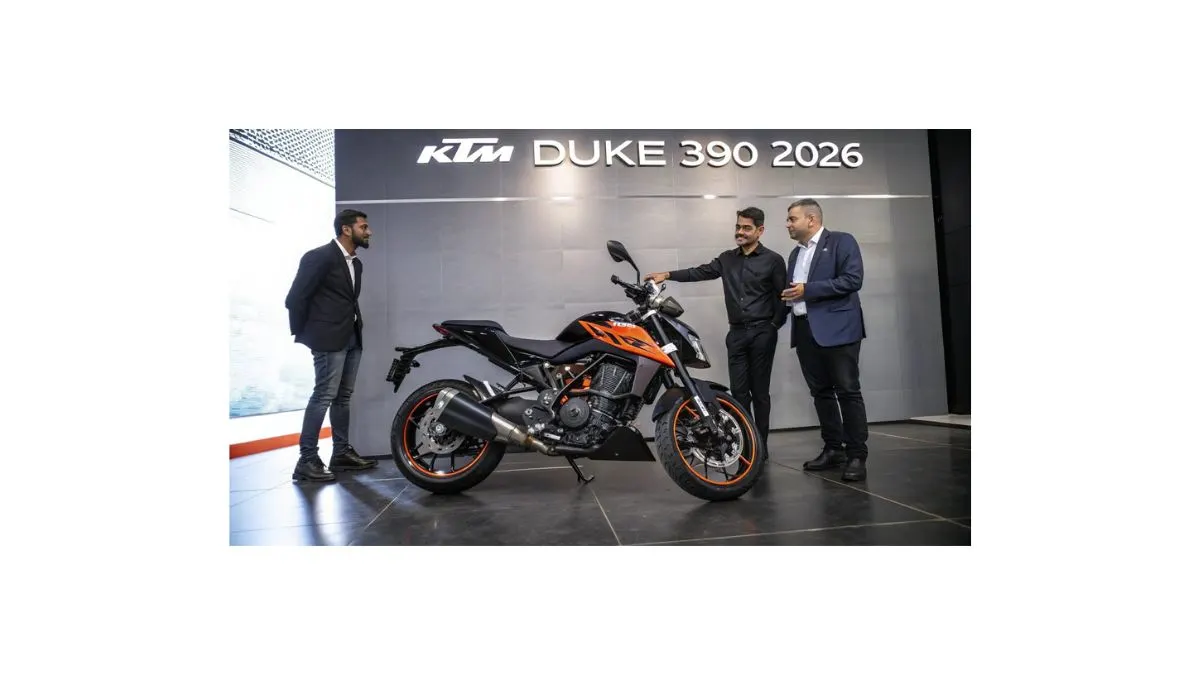
2026 KTM 390 Duke Unveiled Globally With Subtle Updates and Familiar Power
KTM has globally unveiled the 2026 KTM 390 Duke, and the update is more strategic than it appears. Instead of adding power or new features, KTM has focused on visual refinement while retaining the proven 399 cc engine, advanced electronics, and aggressive streetfighter character. This approach signals confidence in a platform that already leads its segment. With India expected to receive the updated model soon, the unchanged mechanical package could help keep prices stable. For buyers, the 2026 Duke represents continuity, reliability, and performance maturity rather than unnecessary yearly upgrades.
Why KTM’s Quiet 2026 Update Is Actually a Strategic Move
The global unveiling of the 2026 KTM 390 Duke may look quiet on the surface, but it says far more about KTM’s current strategy than the lack of mechanical upgrades might suggest. In an era where manufacturers often rush to add features or tweak engines every model year, KTM has chosen restraint. And that decision is worth examining.
A signal of confidence, not complacency
By keeping the core of the 390 Duke unchanged for 2026, KTM is effectively declaring that the current generation has hit a sweet spot. The 399 cc platform, introduced recently, already pushed the segment forward in terms of performance, electronics, and overall ride sophistication. Rather than fixing what isn’t broken, KTM appears focused on refining perception and extending the product’s lifecycle.
This matters because the 390 Duke is not just another model in KTM’s lineup. It is the brand’s volume driver in many markets, including India, and a motorcycle that often serves as a rider’s first serious performance machine.
Design tweaks that target maturity, not aggression
The most noticeable update for 2026 comes in the form of new colour treatment. The Atlantic Blue shade replaces some of the overtly loud visual cues KTM has long been associated with. Blacked-out wheels and a darker front fender further tone down the visual aggression.
This shift is subtle but intentional. KTM seems to be acknowledging that the 390 Duke buyer base has evolved. Today’s customer is not always a college-going enthusiast chasing attention. Many are working professionals who want performance without screaming for it at every traffic light. The updated colour palette nudges the 390 Duke closer to that audience without alienating its sporty DNA.
Features already ahead of the curve
The unchanged feature list is another reminder of how far ahead the current 390 Duke already is. Cornering ABS, multiple ride modes, launch control, supermoto ABS, a TFT display with connectivity, and full LED lighting are still not universal in the sub-400 cc segment.
From a journalist’s perspective, this highlights a broader industry reality: many rivals are still catching up to what KTM has already standardised. That makes yearly feature additions less urgent and gives KTM room to focus on consistency and reliability instead.
The engine remains the benchmark
Mechanically, the 399 cc single-cylinder engine continues unchanged, and that is unlikely to disappoint most buyers. With over 44 bhp on tap and a healthy torque figure, it remains one of the most powerful engines in its class. More importantly, it delivers a balance of aggression and usability that works both in city riding and spirited highway runs.
The inclusion of a bi-directional quickshifter as standard still feels like a luxury in this segment, reinforcing the Duke’s positioning as a performance-first naked.
What this means for India
Although KTM has not announced an India launch timeline, the country remains one of its most critical markets. Given the minimal changes, the India-spec KTM 2026 390 Duke is unlikely to see a significant price hike. That is good news in a segment where rising costs have pushed many motorcycles out of reach for younger buyers.
For Indian customers, this update suggests stability. Those considering a purchase won’t feel buyer’s remorse over missing out on major upgrades, while existing owners can be confident that their motorcycles haven’t been rendered obsolete overnight.
Looking ahead
The bigger question is what comes next. By holding back major updates for 2026, KTM may be creating space for a more meaningful leap in the coming years, possibly tied to stricter emission norms or platform-wide revisions.
For now, the 2026 KTM 390 Duke stands as a reminder that evolution does not always need to be dramatic. Sometimes, staying the course is the strongest statement a brand can make.
FAQs
Is the 2026 KTM 390 Duke mechanically different from the current model?
No. The 2026 KTM 390 Duke retains the same 399 cc liquid-cooled engine, six-speed gearbox, and bi-directional quickshifter as the previous model. KTM has chosen not to alter performance or mechanical components for this update.
What’s new in the 2026 KTM 390 Duke?
The update is primarily visual. KTM has introduced a new Atlantic Blue colour option along with darker design elements such as black alloy wheels and a black front fender, giving the bike a more mature and premium appearance.
Will the 2026 KTM 390 Duke launch in India?
While KTM has not officially confirmed an India launch date, the 390 Duke is a key model for the Indian market. Given the global unveiling, an Indian introduction is expected in the coming months.
Will the price increase with the 2026 update?
A major price hike is unlikely. Since there are no mechanical or feature additions, KTM is expected to keep pricing largely stable, which could work in favour of Indian buyers.
Is the 2026 KTM 390 Duke still worth buying in 2026?
Yes. The 2026 KTM 390 Duke continues to offer one of the most advanced electronics packages and strongest performance outputs in the sub-400 cc naked segment, making it a compelling choice even without major updates.
Why didn’t KTM add new features for 2026?
The current-generation 390 Duke already leads its segment in terms of performance and technology. KTM’s approach suggests confidence in the existing platform rather than the need for incremental, cosmetic feature additions.