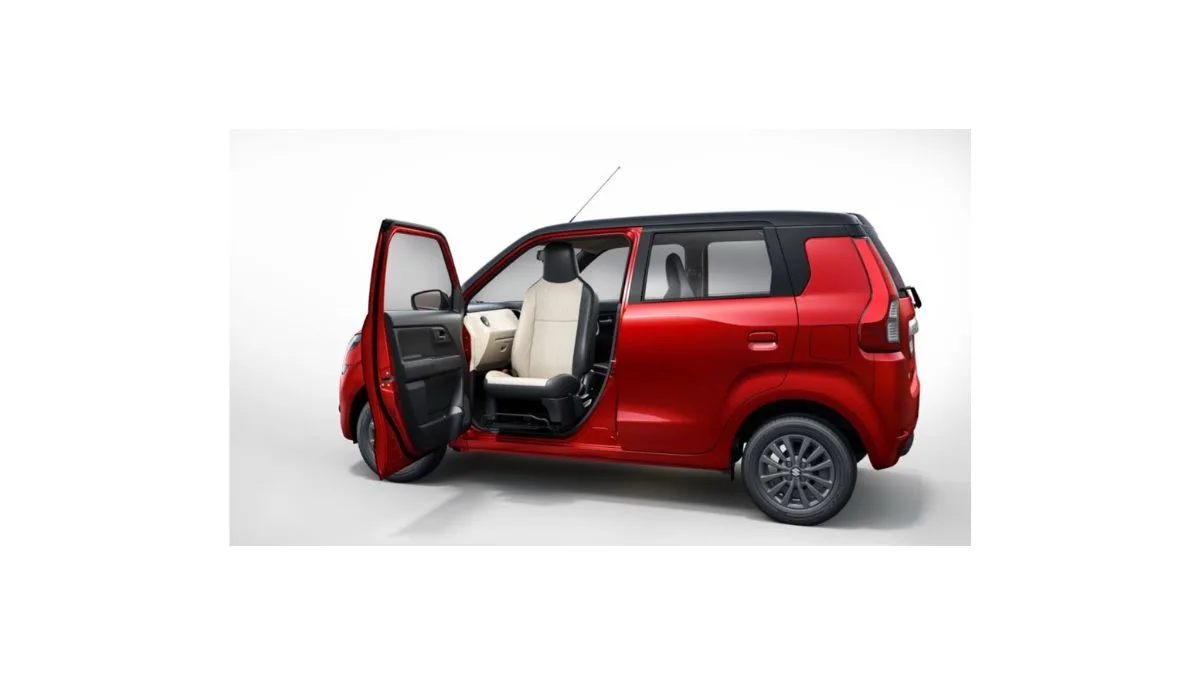
Maruti Suzuki Introduces a Swivel Seat Option for the Wagon R
In an industry obsessed with touchscreen sizes, mileage figures, and launch hype, Maruti Suzuki has done something refreshingly different. With the introduction of a swivel seat option for the Wagon R, India’s largest carmaker has chosen to solve a real, everyday problem—how easily a person can get in and out of a car.
This isn’t a cosmetic update or a feature designed to pad a brochure. It’s a practical intervention aimed squarely at senior citizens and people with limited mobility, two groups that are often overlooked in mainstream car design despite forming a growing share of India’s car-owning households.
Why This Move Actually Matters
India is aging faster than most automakers like to admit. Joint families are shrinking, nuclear households are rising, and more elderly parents now rely on personal vehicles rather than chauffeurs or public transport. At the same time, awareness around disability-friendly infrastructure is improving, but car accessibility has lagged behind.
Getting into a low, narrow hatchback like the Wagon R can be physically taxing for many—especially those with knee issues, hip replacements, or balance challenges. By allowing the seat to swivel outward, Maruti is addressing the most basic friction point in car ownership: ingress and egress.
What makes this more significant is that Maruti hasn’t positioned this as a niche, custom-built vehicle or an expensive special variant. Instead, it’s a retrofit accessory that works on both new and existing Wagon R models. That choice alone dramatically widens its real-world impact.
Thoughtful Execution, Not Gimmickry
Unlike many accessibility solutions that require permanent alterations, the Wagon R swivel seat retains the original seat structure. The kit can be installed in about an hour, without cutting or modifying the vehicle’s body or chassis. That matters for safety, warranty integrity, and resale value—three things Indian buyers care deeply about.
Maruti has also done its homework on compliance. The kit has been tested and certified by ARAI, meeting all applicable safety standards, and it carries a three-year warranty. In other words, this isn’t a dealership-level hack or aftermarket experiment—it’s a factory-approved solution.
The development partnership with Bengaluru-based startup TRUEAssist Technology is also worth noting. It signals Maruti’s increasing willingness to collaborate with specialized Indian startups rather than rely solely on in-house engineering for niche problems. That’s a healthy sign for the ecosystem.
Why the Wagon R Is the Right Car for This Feature
The Wagon R isn’t just one of Maruti’s best-selling models—it’s often the first car for middle-class families and a long-term companion for older buyers. Its tall-boy design already offers a relatively upright seating position, which makes it a logical candidate for further accessibility enhancements.
By rolling this feature out on the Maruti Suzuki Wagon R rather than a premium model, Maruti is effectively saying that inclusive design shouldn’t be reserved for expensive cars. That’s an important philosophical shift in a price-sensitive market like India.
Safety Context: Accessibility Meets Awareness
This push toward accessibility also comes at a time when Indian car buyers are becoming far more conscious of overall vehicle safety. Recent crash test outcomes—such as the Suzuki Baleno’s 2-star Latin NCAP safety result—have sparked wider conversations around how safety standards, usability, and real-world ownership experience intersect. While crash ratings measure structural protection, features like the Wagon R’s new swivel seat highlight another dimension of safety: how comfortably and confidently a person can enter, exit, and use a car every single day.
Limited Rollout—for Now
Initially, the swivel seat kit will be available at around 200 Arena dealerships across 11 cities. While that may sound restrictive, it’s a sensible pilot approach. Installation quality, staff training, and customer education will be critical to the success of such an accessory.
If demand materializes—and there’s strong reason to believe it will—expect Maruti to expand availability and potentially introduce similar solutions on other high-volume models like the Swift, Dzire, or even compact SUVs.
The Bigger Picture: Accessibility as a Product Strategy
This move hints at a broader evolution in how Indian automakers may approach product planning in the coming years. As urban buyers mature and family structures change, comfort and usability will increasingly rival performance and features in purchase decisions.
Maruti Suzuki hasn’t reinvented the Wagon R with this update. Instead, it has quietly made it more humane. And sometimes, that kind of progress matters more than any flashy launch.
For an entry-level hatchback starting under ₹5 lakh, that’s a powerful statement—and one the rest of the industry would do well to pay attention to.