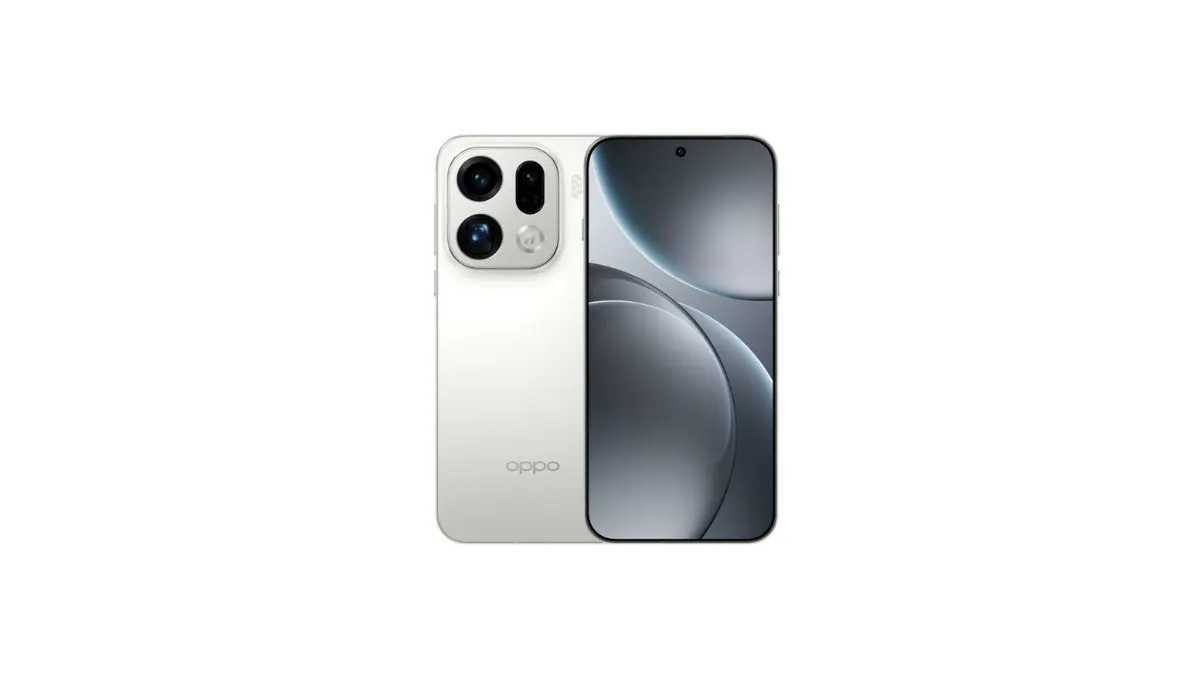
OPPO Find X9 Ultra Spotted With 300mm Lens Extender — A Bold New Era for Mobile Photography
OPPO Find X9 Ultra may be preparing one of the most radical camera upgrades ever attempted on a smartphone. A leaked engineering prototype shows a dedicated camera grip paired with a 300mm optical lens extender a focal length usually reserved for professional cameras. If this system reaches consumers, it could fundamentally change what smartphones are capable of capturing, especially for wildlife, sports, and long-distance photography. More than a gimmick, this move signals OPPO’s intent to push hardware innovation beyond megapixels and software tricks, potentially redefining the Ultra flagship category in 2026.
OPPO Find X9 Ultra Review
Smartphone cameras have evolved rapidly, but their progress has followed a familiar path: bigger sensors, higher megapixels, and increasingly sophisticated computational photography. The leaked OPPO Find X9 Ultra prototype suggests the next leap may come from a different direction altogether optical reach.
Images shared online reveal a OPPO Find X9 Ultra prototype fitted into a dedicated camera grip, paired with an attachable optical module clearly marked “300mm.” If accurate, this would be the longest true optical focal length ever attempted within a mainstream smartphone ecosystem. More importantly, it appears designed not as a novelty accessory, but as an integrated imaging system.
Why a 300mm Lens on a Phone Is a Major Breakthrough
To understand the significance, it helps to put the number into perspective. Most flagship smartphones today max out at 5x optical zoom, roughly equivalent to 120–135mm. Even the most ambitious periscope designs rarely exceed the 200mm mark with usable quality.
A 300mm equivalent lens narrows the field of view dramatically, enabling tight framing of distant subjects birds, wildlife, stage performers, or architectural details that smartphones traditionally struggle to capture. This isn’t incremental improvement; it’s a shift into territory normally occupied by DSLR and mirrorless cameras with large telephoto lenses.
For years, phone makers have marketed extreme zoom levels using digital cropping and AI upscaling. While impressive on spec sheets, those images often collapse under scrutiny. OPPO’s approach appears different: prioritising genuine optical magnification over inflated numbers.
What the Prototype Design Tells Us
The leaked images reveal more than just a lens. The phone sits inside a purpose-built grip with physical controls, likely including a two-stage shutter button, zoom rocker, and programmable keys. This design choice matters.
Long-range photography magnifies hand movement, making stability critical. A grip improves ergonomics and control, reducing motion blur and enabling more deliberate shooting. This recalls earlier attempts like Nokia’s Lumia camera accessories, but OPPO’s implementation appears more integrated and modern.
Equally important is the bespoke nature of the extender. Unlike generic clip-on lenses, a first-party optical module can be tuned precisely to the phone’s sensor, autofocus system, and image processing pipeline. That dramatically improves alignment, sharpness, and reliability three areas where third-party solutions usually fail.
The Technical Challenges OPPO Must Overcome
Pushing to 300mm isn’t easy. Optical extenders reduce incoming light, often by one to two stops. Many smartphone telephoto lenses already operate at relatively narrow apertures, meaning the sensor and software must work harder to maintain image quality.
At such focal lengths, stabilization becomes mission-critical. Even tiny vibrations can ruin a shot. OPPO will need exceptional optical image stabilization, reinforced by electronic stabilization and multi-frame stacking, to keep images sharp.
This is where OPPO’s rumored camera hardware becomes relevant. The OPPO Find X9 Ultra is expected to feature high-resolution sensors, including large megapixel telephoto units. High resolution allows oversampling combining multiple pixels into cleaner output which is invaluable when light is limited.
OPPO’s ongoing collaboration with Hasselblad could also play a role, particularly in maintaining consistent color science and tonal balance across different lenses and focal lengths.
A Shift Away From Zoom Marketing Gimmicks
What makes this leak especially interesting is its philosophy. Rather than promising exaggerated “100x” zoom figures, OPPO Find X9 Ultra appears to be focusing on making a specific, extreme focal length genuinely usable.
That’s a more mature approach to mobile imaging. Serious photographers don’t chase arbitrary zoom numbers; they choose lenses for specific jobs. A well-implemented 300mm option, even if used occasionally, adds real creative capability rather than empty marketing appeal.
If OPPO succeeds, it may pressure competitors to rethink their own camera strategies. The next wave of smartphone photography innovation could revolve less around algorithms and more around modular, purpose-built optics.
Market Impact and Competitive Implications
OPPO’s Ultra models have traditionally had limited global availability, but recent reports suggest the OPPO Find X9 Ultra may see a broader release. If the 300mm system reaches markets outside China, it would give OPPO a clear differentiator against rivals like Samsung, Xiaomi, and vivo.
Even if the lens extender remains an optional accessory, it strengthens OPPO’s brand positioning as a hardware innovator. OPPO Find X9 Ultra flagships are as much about storytelling as sales volume, and this story is compelling.
Over time, features that begin as niche experiments often influence mainstream designs. Today’s periscope lenses were once considered impractical; now they’re common. A modular telephoto ecosystem could follow a similar trajectory.
What Will Decide Whether This Succeeds
Several unanswered questions remain. How much light loss does the extender introduce? Can autofocus remain fast and accurate at 300mm? Does edge sharpness hold up, or do optical compromises creep in?
Practicality will matter as much as performance. The accessory must be portable, easy to attach, and reliable in everyday use. Battery drain and heat management will also be critical, as long-range photography demands constant stabilization and processing.
If OPPO can balance these factors, the OPPO Find X9 Ultra could deliver something rare in today’s smartphone market: a feature that feels genuinely new.
Final Verdict
The OPPO Find X9 Ultra rumored 300mm lens extender isn’t just another leak it’s a signal. It suggests that smartphone photography may be entering a phase where hardware innovation matters again, not just software refinement.
Whether this concept becomes a commercial reality or remains an ambitious experiment, it already challenges assumptions about what a phone camera can be. And if OPPO pulls it off, 2026 may be remembered as the year smartphones stopped imitating cameras and started becoming modular imaging tools in their own right.