Realme P4 Power 5G: How a 10,000mAh Battery Signals a New Direction for Smartphones
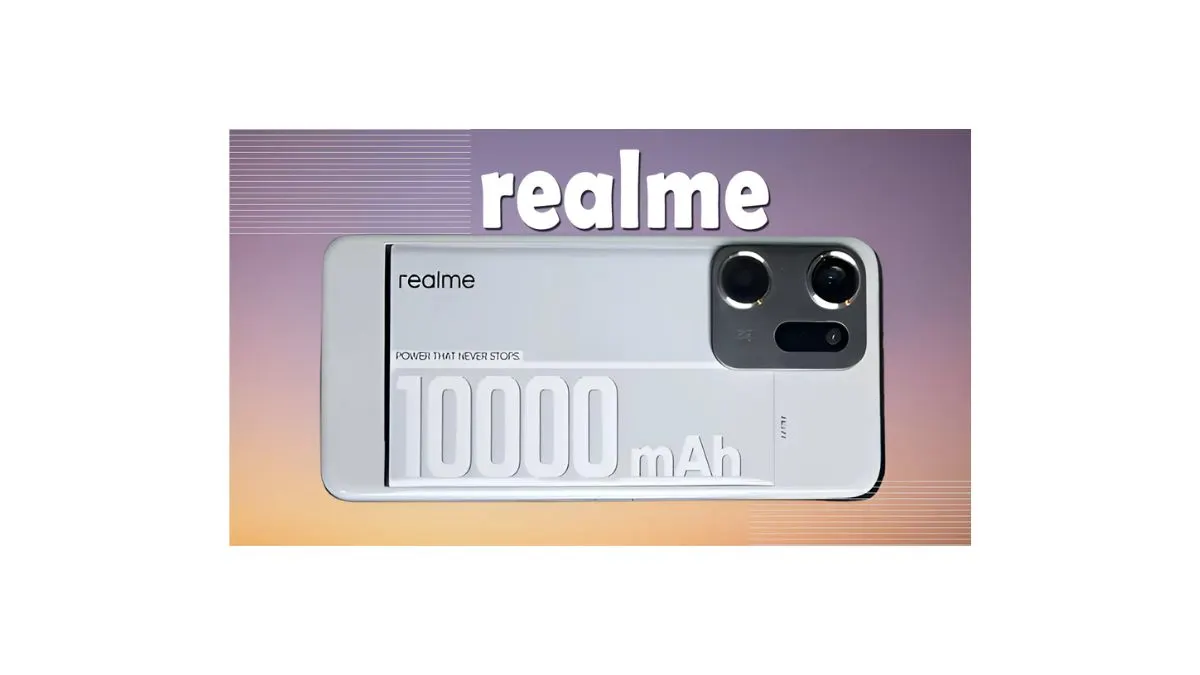
The Realme P4 Power 5G isn’t just another smartphone launch it’s a clear statement about what users actually need in 2026. By teasing a phone with a massive 10,000mAh battery, Realme is challenging years of industry compromise around battery life, weight, and design. At a time when AI features, 5G, and high-refresh displays are draining phones faster than ever, Realme’s latest P-series device puts endurance back at the center of the conversation. With a slim body, modern display tech, and power-focused features, the P4 Power could redefine expectations for everyday smartphone reliability.
Realme P4 Power Signals a Shift in Smartphone Priorities and It’s About Time
For years, smartphone launches have followed a predictable script: faster chips, more cameras, thinner bodies. Battery life arguably the most important real-world feature has been treated as a background detail. The upcoming Realme P4 Power 5G breaks that pattern decisively, and that’s why this launch matters more than it first appears.
By teasing a phone with a 10,000mAh battery, Realme isn’t just adding another model to its P-series lineup. It’s challenging an industry assumption: that truly long battery life and modern smartphone design can’t coexist.
Why a 10,000mAh Battery Is a Big Deal in 2026
Most mainstream smartphones today hover between 4,500mAh and 5,500mAh. Even so-called “big battery” phones rarely cross 6,000mAh without becoming bulky, niche devices. Realme’s decision to push into five-digit battery territory while still promising a slim, 218g body marks a notable engineering and strategic shift.
This isn’t about marketing bravado. It’s about addressing a real user problem: battery anxiety. Despite fast charging and power-efficient chips, many users still end their day hunting for a charger. A phone that genuinely lasts well over a day of heavy use changes how people interact with their devices especially in a country like India, where long commutes, patchy charging access, and heavy mobile usage are common.
The Design Trade-Off Realme Is Trying to Solve
Big batteries traditionally come with compromises: thick bodies, awkward weight distribution, or dated internals. Realme appears keenly aware of this stigma.
Early teasers suggest theRealme P4 Power 5G will feature:
A “pencil-thin” profile despite the massive battery
A weight of around 218 grams, which is surprisingly restrained
A modern 1.5K display with a 144Hz refresh rate
If these claims hold up in real-world testing, Realme may have found a sweet spot where endurance doesn’t come at the cost of daily comfort. That’s significant, because design not battery size is often what determines whether a phone becomes mainstream or remains a niche curiosity.
Bypass Charging and Reverse Charging: Subtle but Smart Additions
Two lesser-discussed features hinted at in teasers bypass charging and 27W reverse charging reveal more about who this phone is for.
Bypass charging allows the phone to draw power directly from the charger during gaming or heavy use, reducing heat and battery wear. This is a feature usually reserved for gaming-focused phones, suggesting Realme sees power users not just casual buyers as a key audience.
Reverse charging, meanwhile, effectively turns theRealme P4 Power 5G into a backup power bank. For travelers, students, or professionals on the move, that’s not a gimmick it’s a practical tool.
Performance and Cameras: Sensible, Not Showy
Realme isn’t positioning the Realme P4 Power 5G as a camera-first or benchmark-chasing device. The rumored triple-camera setup (50MP main, 8MP ultrawide, 2MP sensor) points to a pragmatic approach: reliable photography for everyday use, not experimental hardware that inflates costs.
This fits the broader philosophy of the device. The Realme P4 Power 5G isn’t trying to impress spec-sheet enthusiasts alone. It’s designed for users who value consistency over flashiness people who want their phone to work all day, every day.
Why the P-Series and Why Now?
The P-series has quietly become Realme’s playground for practical innovation. Unlike its GT lineup, which targets performance enthusiasts, or its budget-focused C-series, P-series phones tend to focus on balanced, real-world value.
Launching theRealme P4 Power 5G in India first is also telling. India is one of the world’s most battery-sensitive smartphone markets. Users here care deeply about endurance, thermal performance, and long-term reliability. A phone like the P4 Power is tailored to these priorities.
The appearance of the device on BIS certification (model RMX5107) further confirms that this is not a distant concept it’s an imminent commercial launch.
The Bigger Picture: A Potential Trendsetter
If the Realme P4 Power succeeds, it could trigger a broader rethink across the industry. We’ve already seen refresh rates, fast charging, and camera sensors become standardized over time. Ultra-large batteries could be next, especially as AI features, high-refresh displays, and 5G continue to increase power demands.
In that sense, the Realme P4 Power 5G isn’t just another phone launch it’s a test case. Can endurance become a headline feature again? Can brands sell phones on how long they last, not just how fast they are?
What to Watch Going Forward
The real questions will be answered once the phone launches:
Does the battery life live up to the promise in real-world conditions?
How well does thermal management hold up under sustained use?
Can Realme price this aggressively enough to disrupt the segment?
If the answers are positive, the Realme P4 Power 5G could carve out a unique position in India’s crowded smartphone market not as the fastest or flashiest phone, but as one of the most dependable.
And in 2026, that might be exactly what many users are looking for.